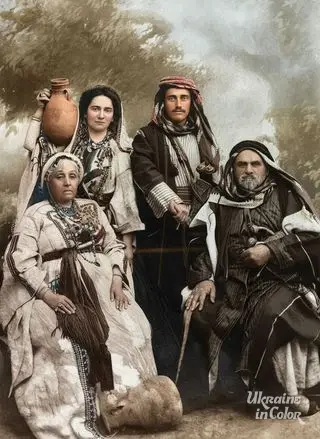
Participants of the Kurultai. In the center are representatives of the Bakhchisarai Muslim Organization led by Sh. Gasprinskaya.
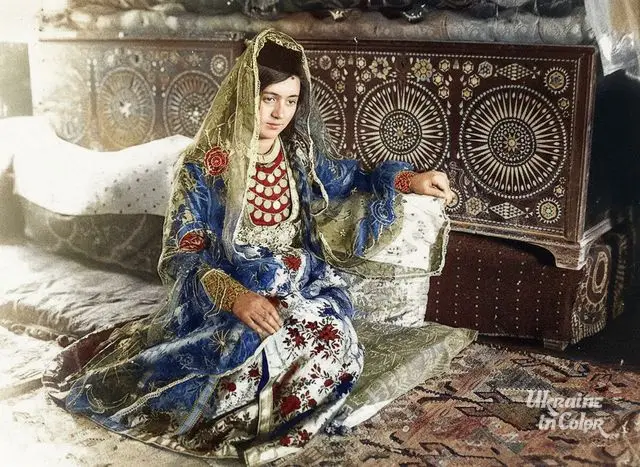
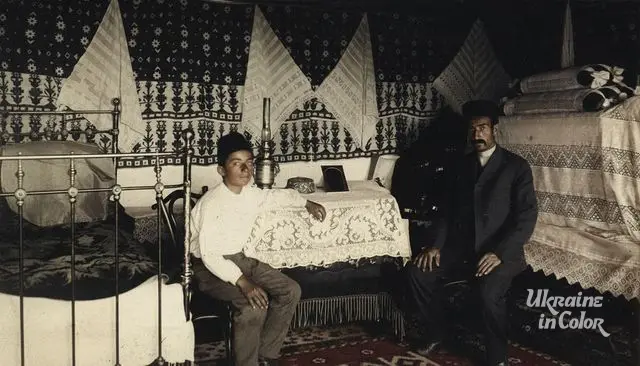
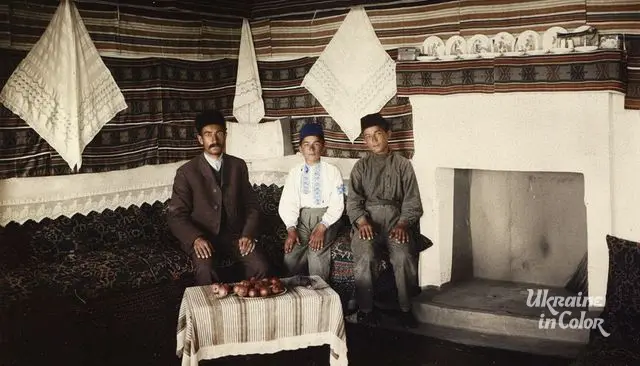
Bride's room. Exposition of the National Museum of the Crimean Tatars, 1920's (Bakhchysarai)
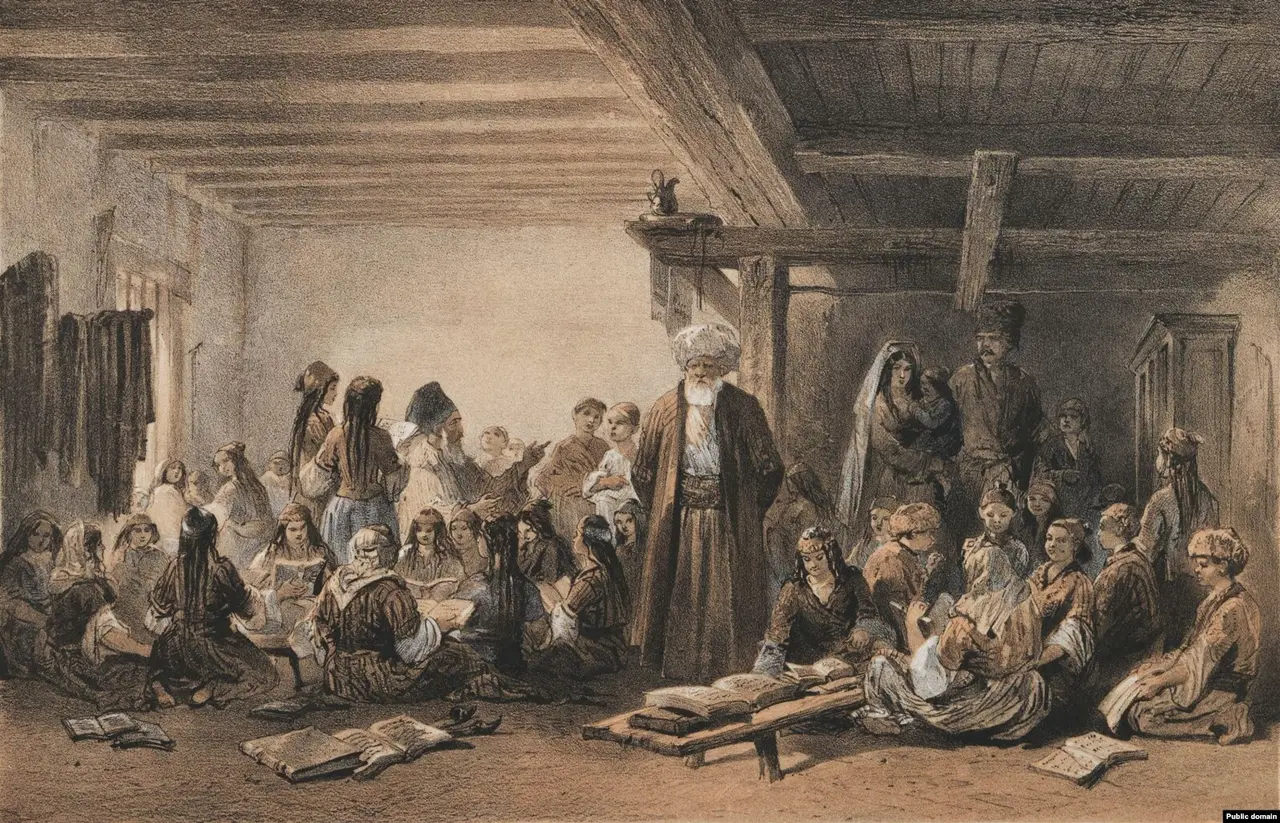
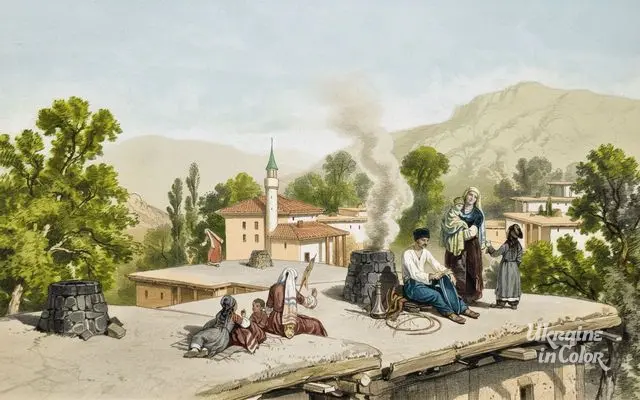
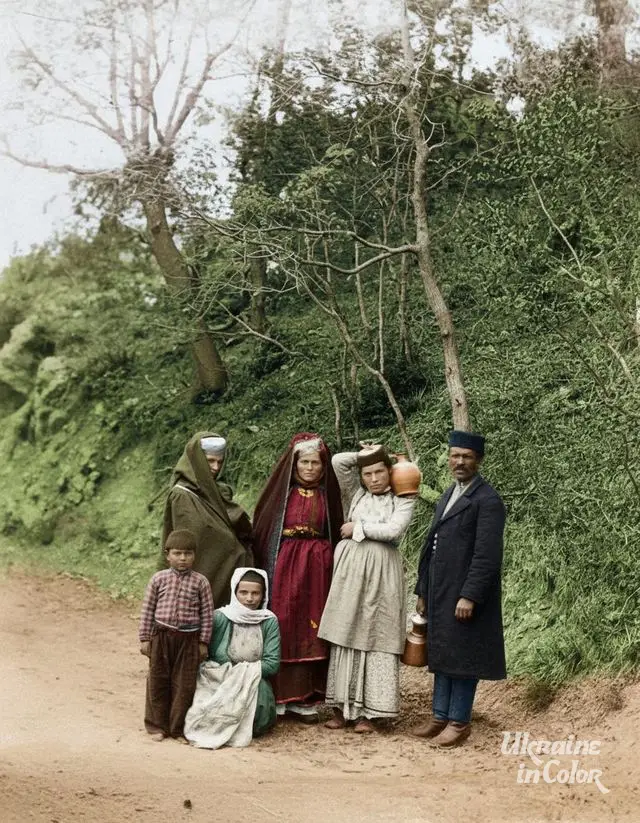
Kapskhor in Crimea: Evening Occupations of the Tatars
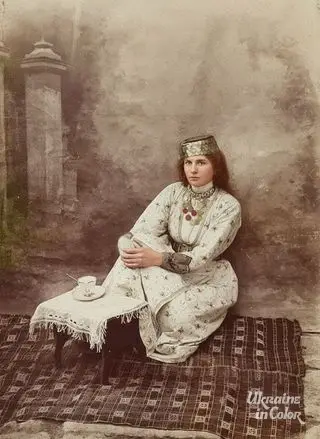
Crimean Tatar Ornek
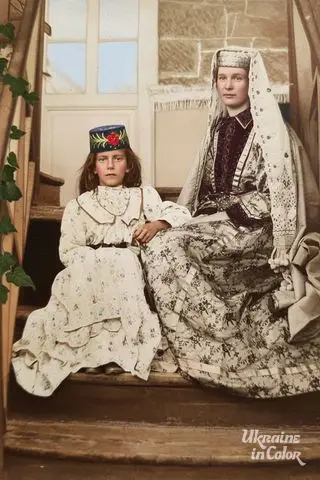
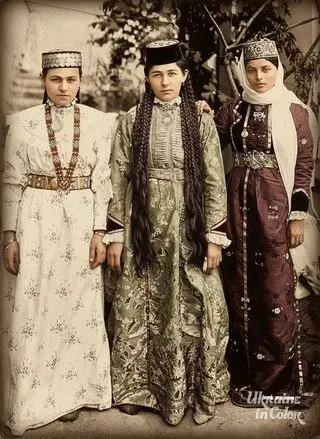
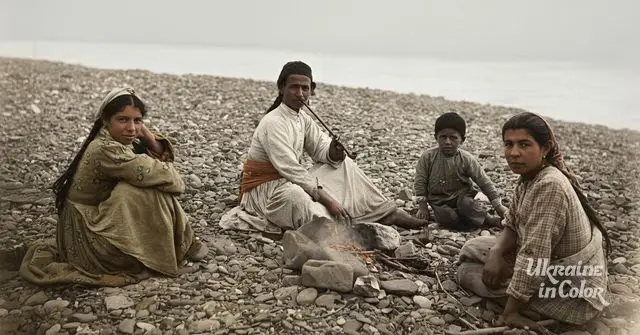
Crimean Tatar women
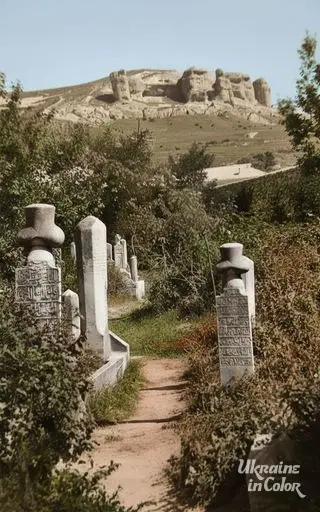
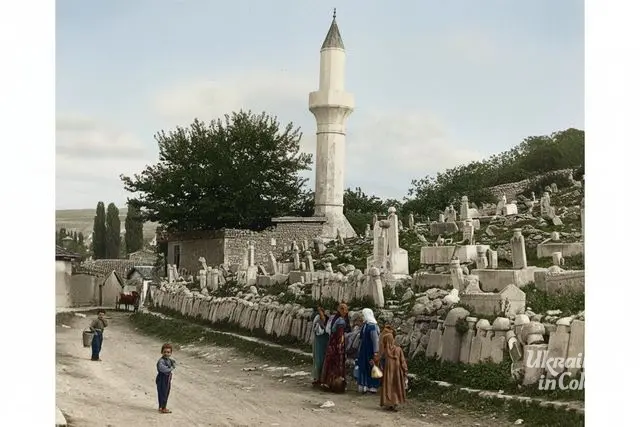
Crimean Tatar cemetery in Bakhchysarai. Photo source: Holos Krymu newspaper.
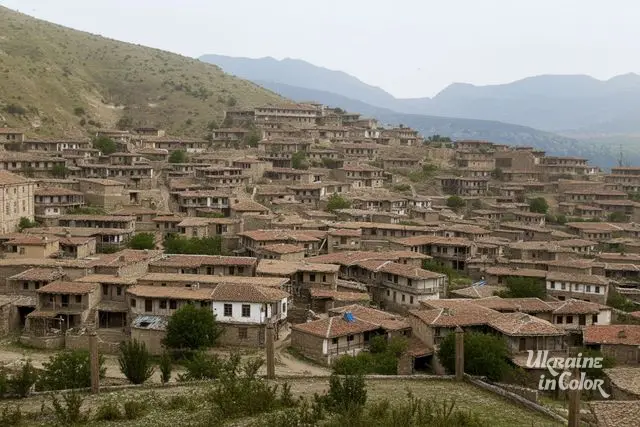
The village of Uskut after the deportation of the Crimean Tatars, 1945.
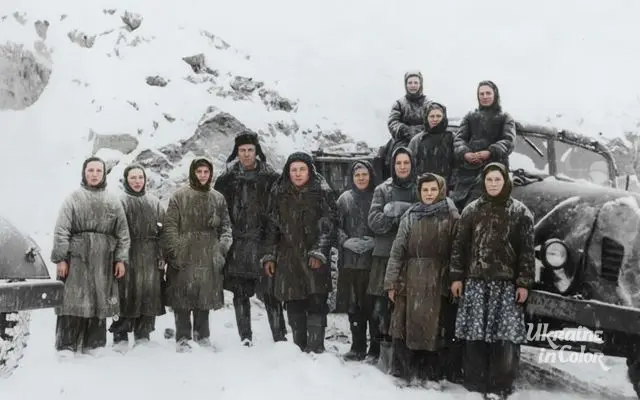
Deported Crimean Tatars in a special settlement in the city of Krasnovishersk (now in Perm Krai, Russia), 1948. Photo source: Association of Muslims of Ukraine.
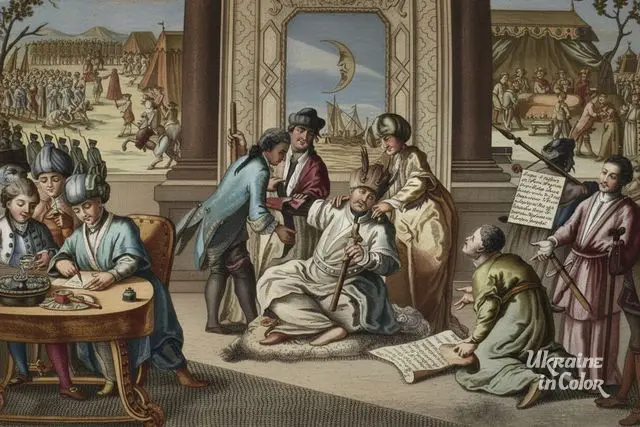
The signing of the Kuchuk-Kainarji Treaty, an engraving from the late 18th century.
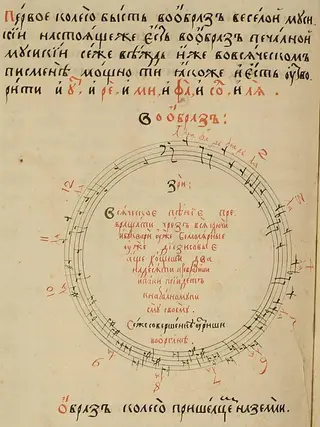
fragment of "Musical Grammar" by M. Dyletsky.A native of Kyiv, Mykola Dyletsky is called the creator of the Western school of partes music, which gave the world a number of outstanding composers.
He wrote the theoretical work “Musical Grammar” — a monument of the Ukrainian Baroque — which was published exactly 350 years ago in Vilna (now Vilnius). In it, Dyletsky explained in detail the technical features of partes singing and composition.
And what is important! In this work, he was the first in the world to describe the circle of fifths — as a graphic diagram by which a musician can trace the harmonic connections between all major and minor keys of 12 notes. For composers, this work made it easier to write music.
This is really worth paying attention to… The work “The Resurrection Canon” by Mykola Dyletsky. Please listen.
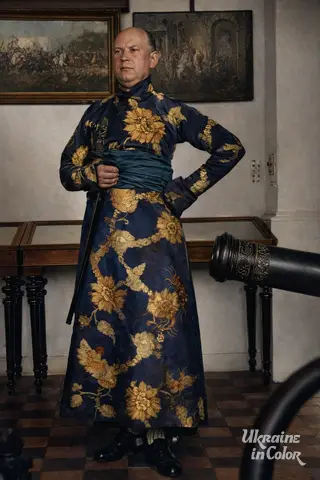
Living Echo of the Cossack Elite: Georgiy Narbut in Paraska Apostol’s Kontusz with Kelep and Colonel MiloradovychIn the photograph, Georgiy Narbut stands in the Cossack hall of the Tarnovsky Museum (now a room of the Chernihiv Regional Library for Youth), fully immersed in a historical Ukrainian image. He is dressed in the kontusz of Paraska Apostol, daughter of Hetman Danylo Apostol, holding a kelep in his right hand, while to his right stands Colonel Mykhailo “Cannon” Miloradovych. This staged yet documentary scene shows Narbut not just studying Cossack-era artifacts, but literally wearing them, turning himself into a living embodiment of the Ukrainian noble-Cossack past.
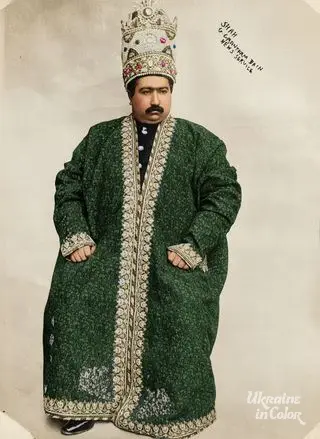
About the Shah of Persia in OdessaShah Mohammed Ali arrived in Odessa on September 10, 1909, fleeing the Persian revolution. He was given a two-story Gothic palace of Brzhozovsky on Gogol Street with 40 rooms to live in; the rent was 12,000 rubles per year and was not paid by him personally. The legend of the “shah’s harem in Odessa” is not confirmed by the press of the time: the media covered his life in detail, but did not write about the harem. In 1911, he secretly left, trying to regain the throne, and was defeated. There are references that in 1912 he was briefly returned to Odessa, but in 1913 the former ruler was no longer in the city, which contradicts later claims that he left only in 1920. Sources (not Wikipedia) are needed regarding his further movements after 1913.
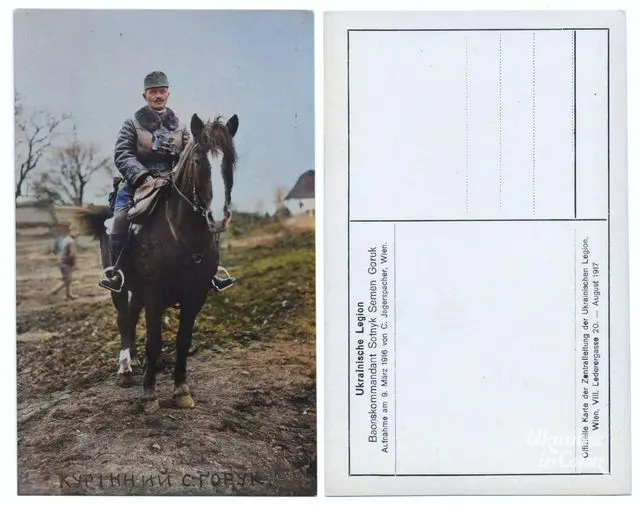
Kurinny S. Goruk
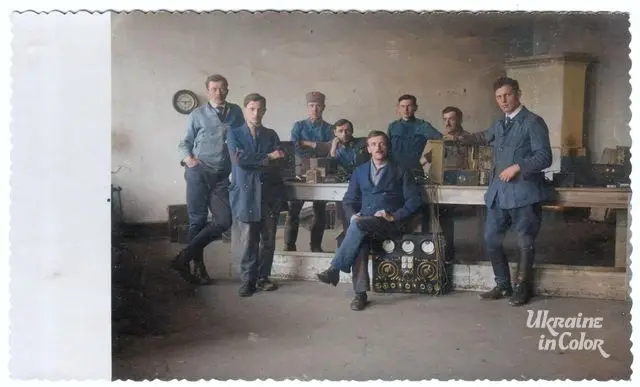
Sich riflemen signalmen with the German radiotelegraph "Telefunken"
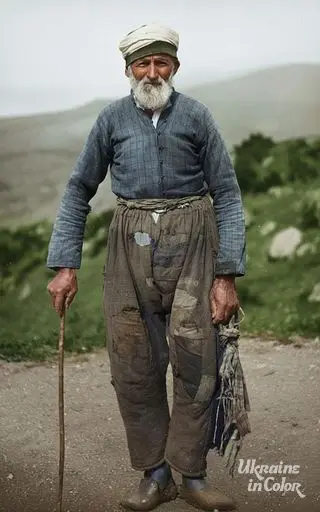
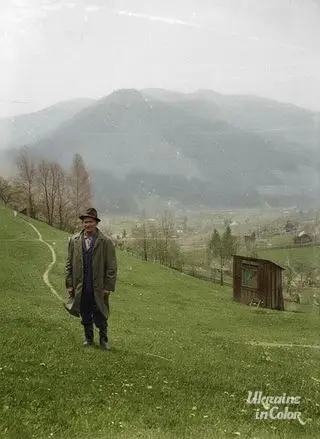
Man against the background of mountains
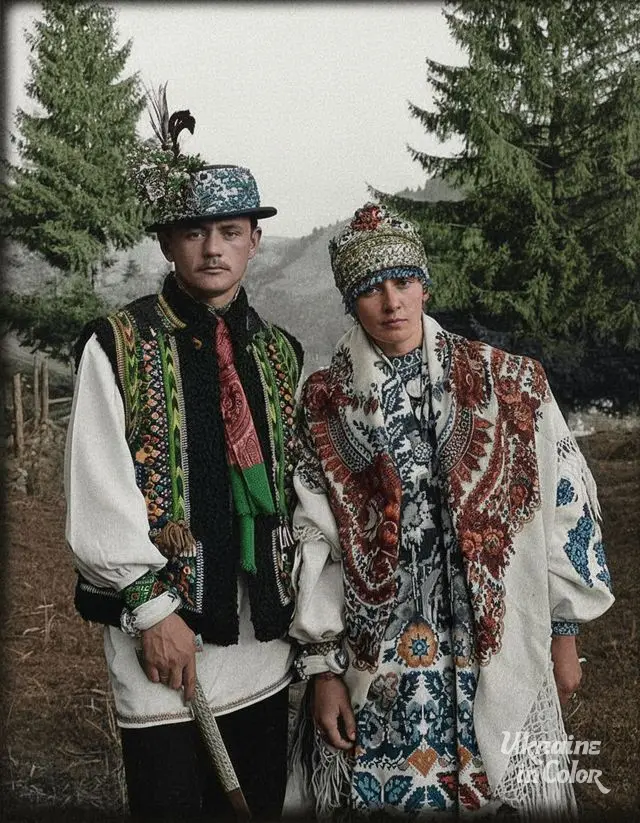
Couple in festive traditional attire
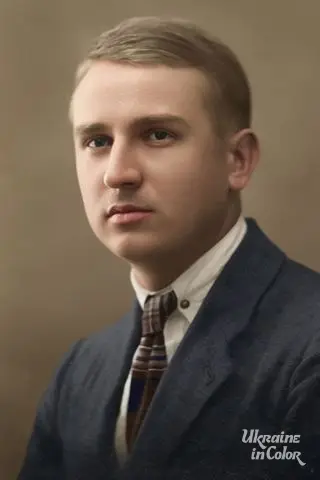
Mykola Zakharovych Levchenko
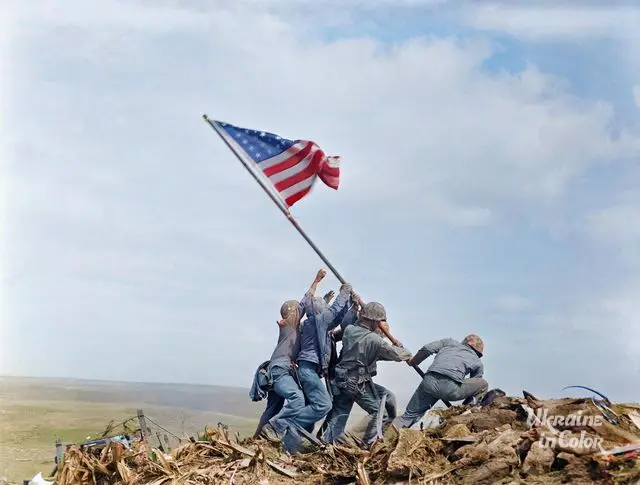
Raising The Flag On Iwo JimaMichael Strank is an American soldier of Ukrainian origin, a symbol of the US victory in World War II. He was born on November 10, 1919 in Oryabyn (Pryashiv region), emigrated to the United States in the 1920s; his father worked in the mines of Pennsylvania. After school (1937), he served in the Civilian Environmental Protection Corps, working on highways. In October 1939, he joined the Marine Corps; participated in battles on the Russell and Bougainville Islands (1942–1944). The commander of the detachment during the Battle of Iwo Jima landed on Iwo Jima on February 19, 1945 and raised a large flag on Mount Suribachi - a photo by Joe Rosenthal "Raising the Flag on Iwo Jima" became an icon of the war. By the end of March, three of the six, including Strank, were dead (March 1, 1945). Buried in Arlington; Marine Corps Memorial based on photo. Awards: Bronze Star (V), Purple Heart, Presidential Citation, Asiatic Pacific Campaign Medal. Played by Barry Pepper in the film Flags of Our Fathers. In Ukraine: mini-sculpture in Uzhgorod (2015), sculpture in the Museum of the Formation
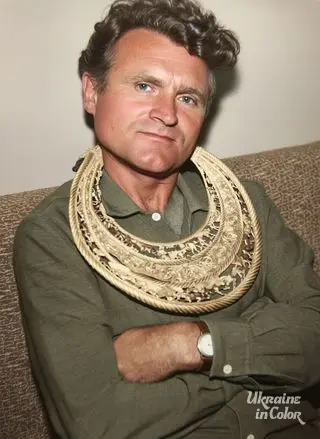
Ukrainian archaeologist Borys Mozolevski with the Scythian Golden Pectoral, which he discovered in 1971.The Golden Pectoral is a solid gold neckpiece from the 4th century BC.
It was found in the Tovsta Mohyla, an ancient Scythian burial mound in southern Ukraine.
The artifact is considered one of the most significant archaeological finds of the 20th century.
Mozolevski's discovery is a rare example of artistry and influential discovery.
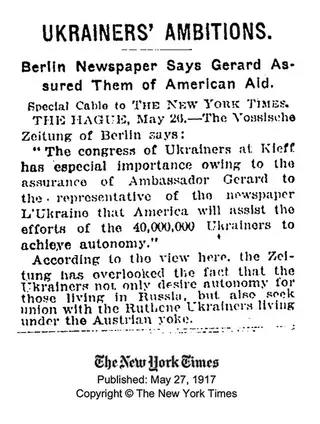
Ukrainers Ambitions. New York Times article 1917“UKRAINERS’ AMBITIONS.”
Special Cable to THE NEW YORK TIMES.
May 27, 1917.
“THE HAGUE, May 26.—The Vossische Zeitung of Berlin says: ‘The congress of Ukrainers at Kieff has especial importance owing to the assurance of Ambassador Gerard to the representative of the newspaper L’Ukraine that America will assist the efforts of the 40,000,000 Ukrainers to achieve autonomy.’
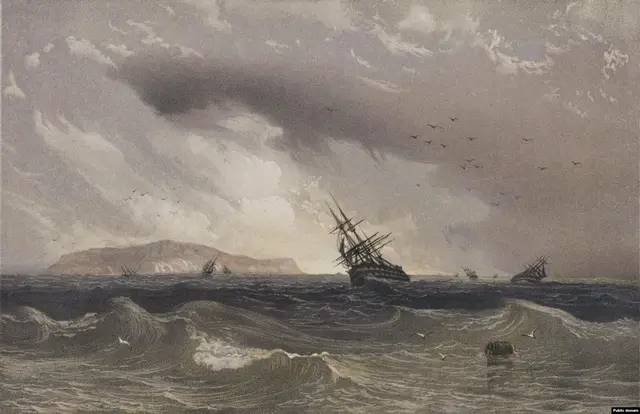
Snake Island by Carlo Bossoli.The painting depicts a stormy sea with a ship, possibly HMS Victory, and a smaller vessel near an island.
The island, historically known as the "Island of Achilles," is located in the Black Sea.
The painting is a public domain work of art.
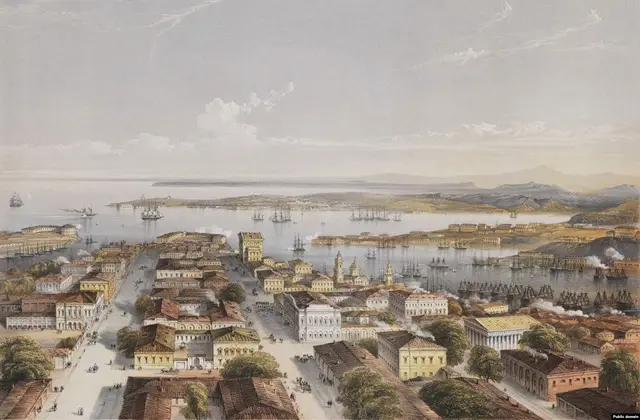
General View of SevastopolCarlo Bossoli was an Italian-Swiss artist known for his detailed landscapes and battle scenes.
The work depicts the city and harbor of Sevastopol, a strategic Black Sea port.
Bossoli created a series of lithographs based on his travels through Crimea in the 1840s.
The image captures Sevastopol shortly after the Crimean War, which concluded in 1856, and shows the destruction from the siege that lasted from October 1854 to September 1855.
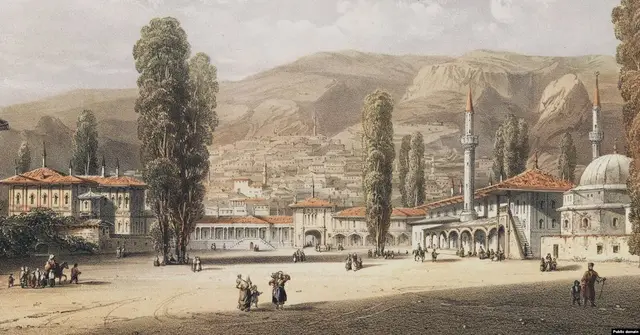
Bakhchysarai, the former capital of the Crimean KhanateThe painting depicts the Bakhchysarai Palace (also known as Khan's Palace or Hansaray), a 16th-century architectural complex that served as the residence of a succession of Crimean Khans. Built in 1532 by Sahib I Giray, it is considered the only preserved example of Crimean Tatar palace architecture in the world.
The palace complex was built with a blend of Ottoman, Persian, and Italian architectural styles. It originally included a mosque, a harem, a cemetery, living quarters, and gardens. The palace's famous "Fountain of Tears" was the subject of a narrative poem by Russian writer Alexander Pushkin.
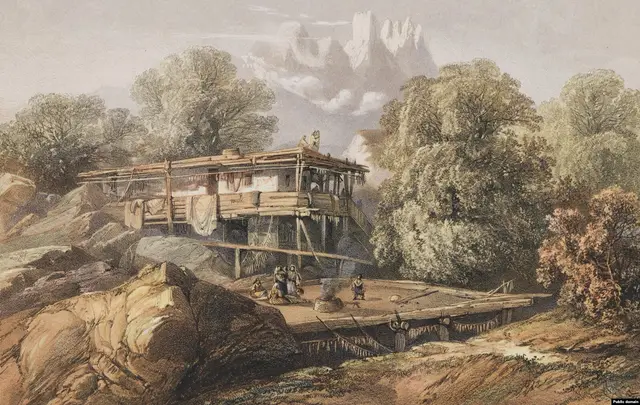
A Tartar House in the Village of AlupkaThe Crimean Tatar people have a rich cultural history, with their architecture showing influences from Islamic and Turkic motifs. The most prominent example is the Bakhchysarai Palace, the former capital of the Crimean Khanate. This palace, which served as a political and cultural center, is the world's only preserved example of Crimean Tatar palace architecture.
After the so called "russian federation" annexation of Crimea and the subsequent deportations in 1944, much of the Crimean Tatar cultural heritage was destroyed. However, artists and activists have been working to revive and preserve Crimean Tatar arts and traditions.
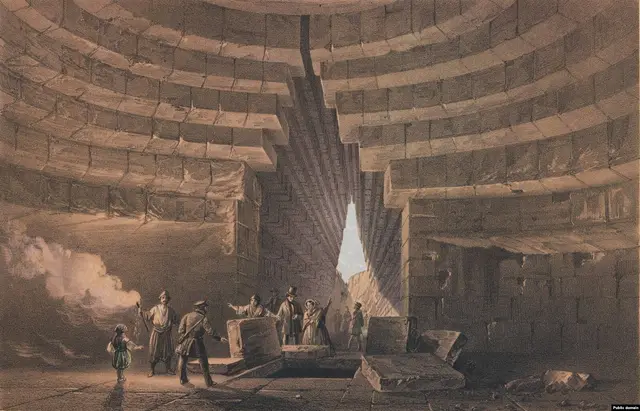
The interior of the "Tomb of Mithridates, near the Lazaretto of Kerch" renamed as "Royal Kurgan" by you know who, a monumental burial mound located in Kerch, CrimeaThe engraving is titled "Tomb of Mithridates, near the Lazaretto of Kerch", reflecting the historical and archaeological context of the time it was created. It's a lithograph, a type of printmaking, rather than a painting.