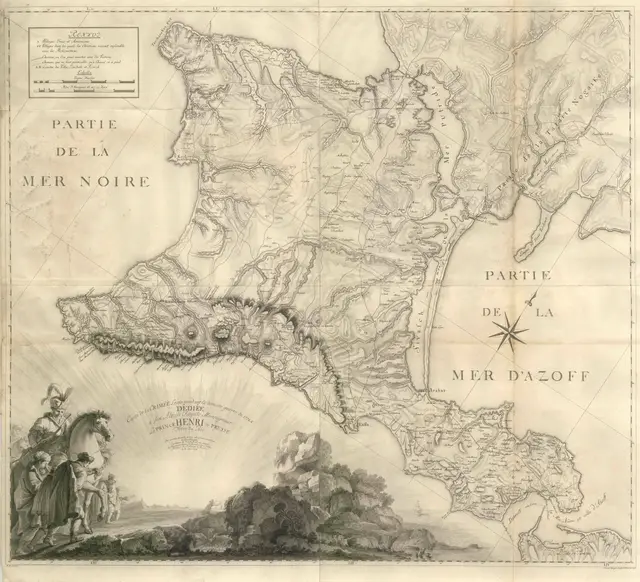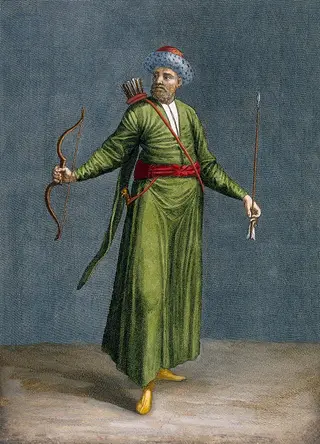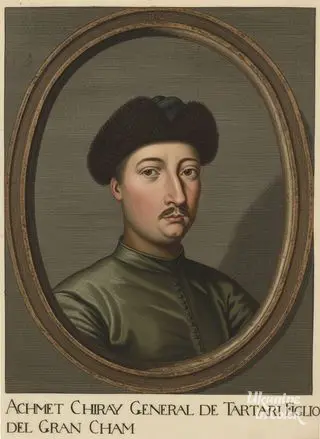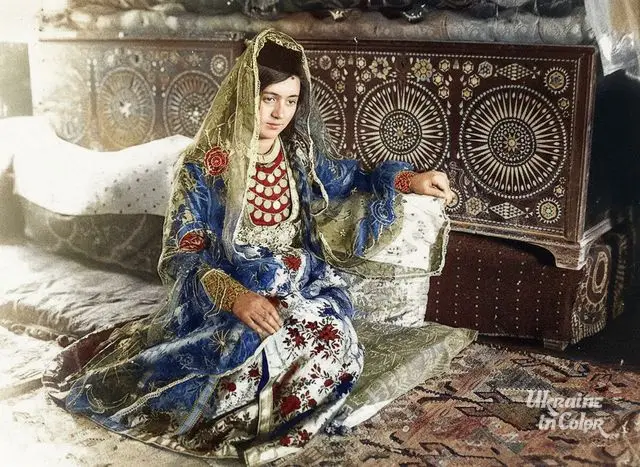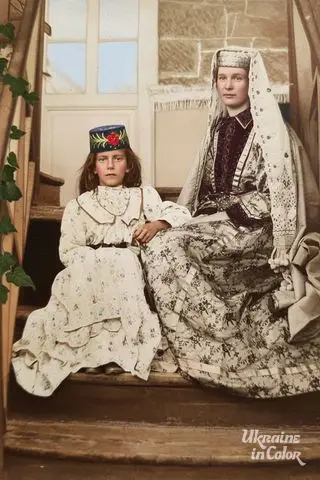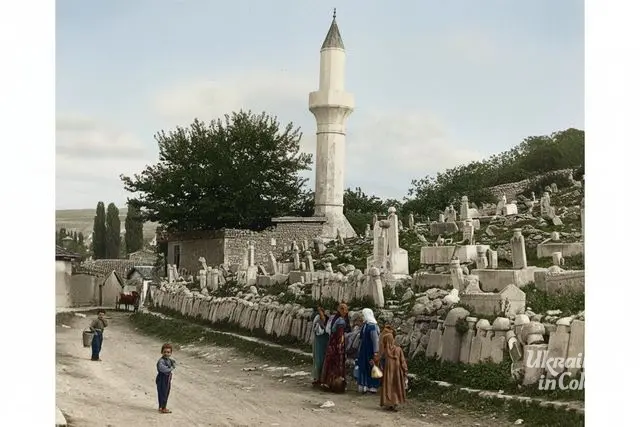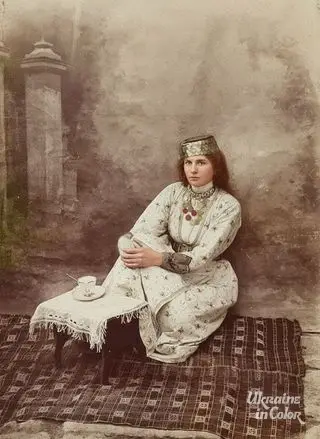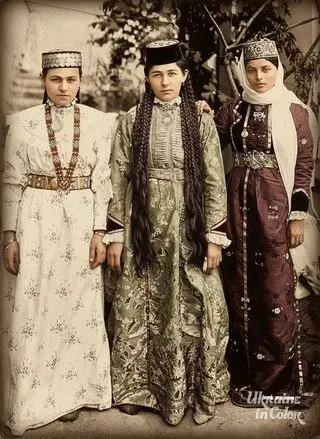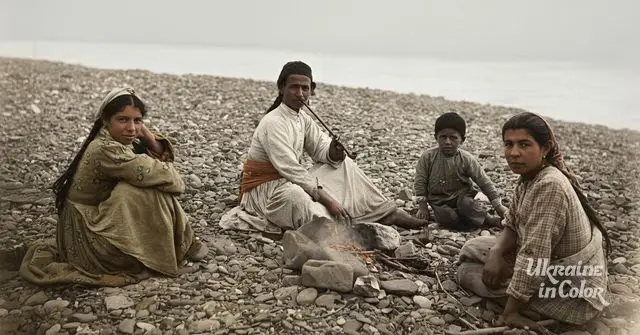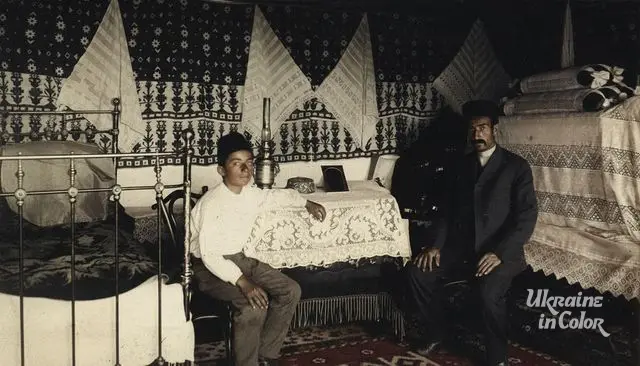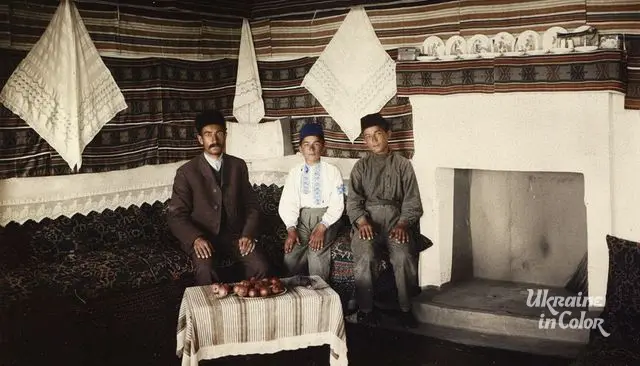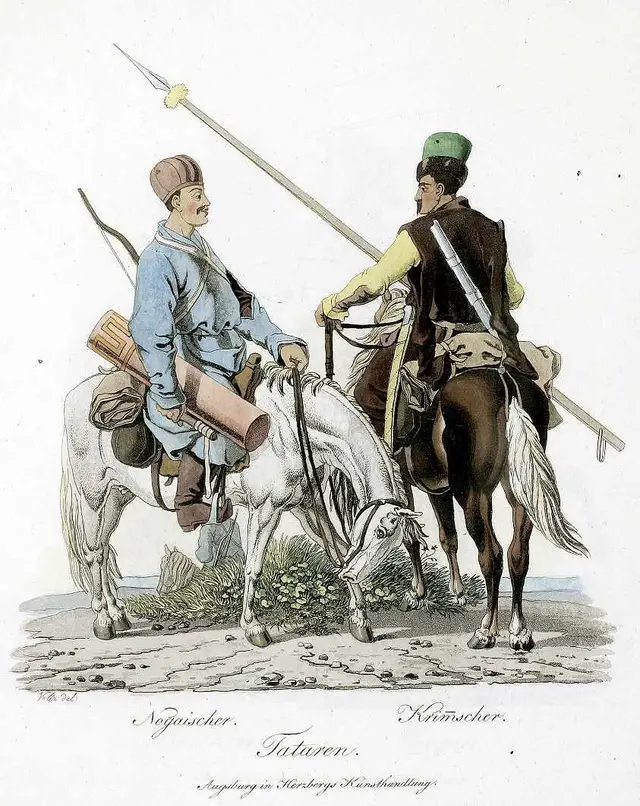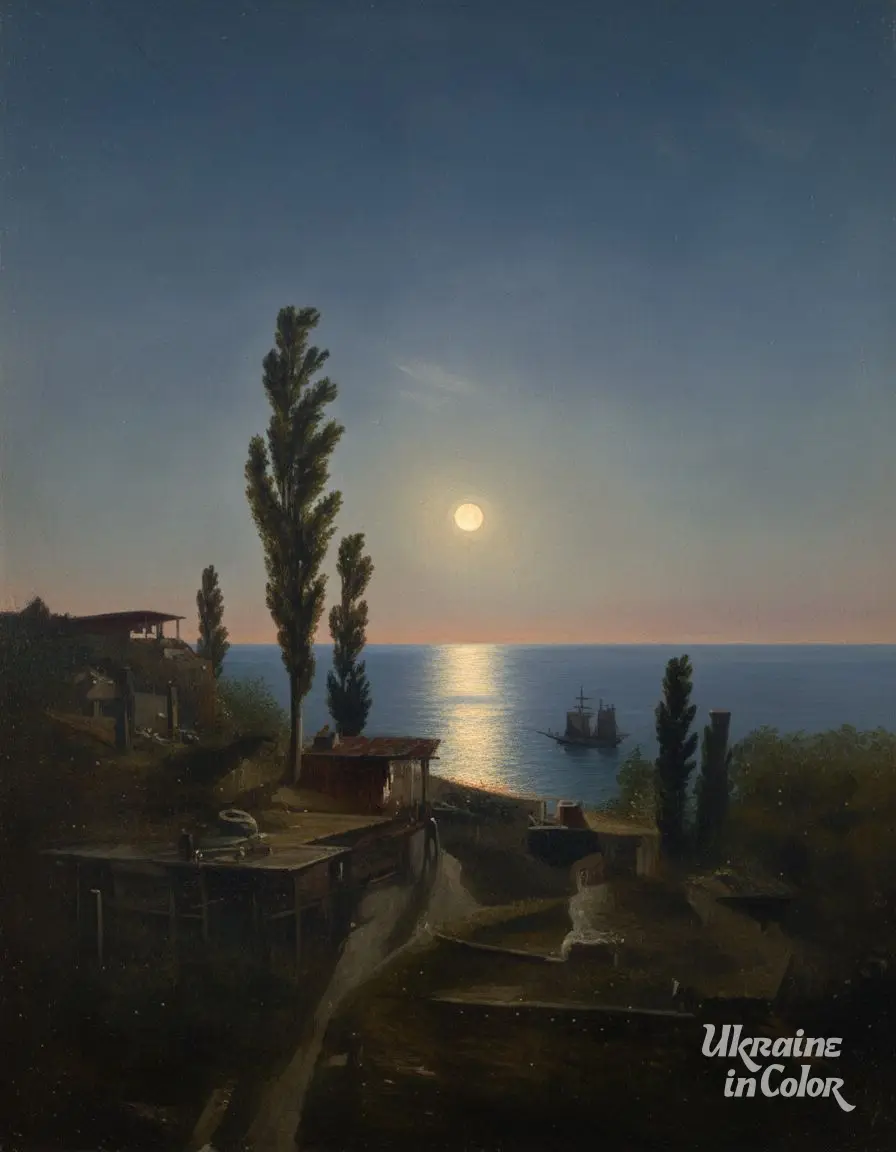
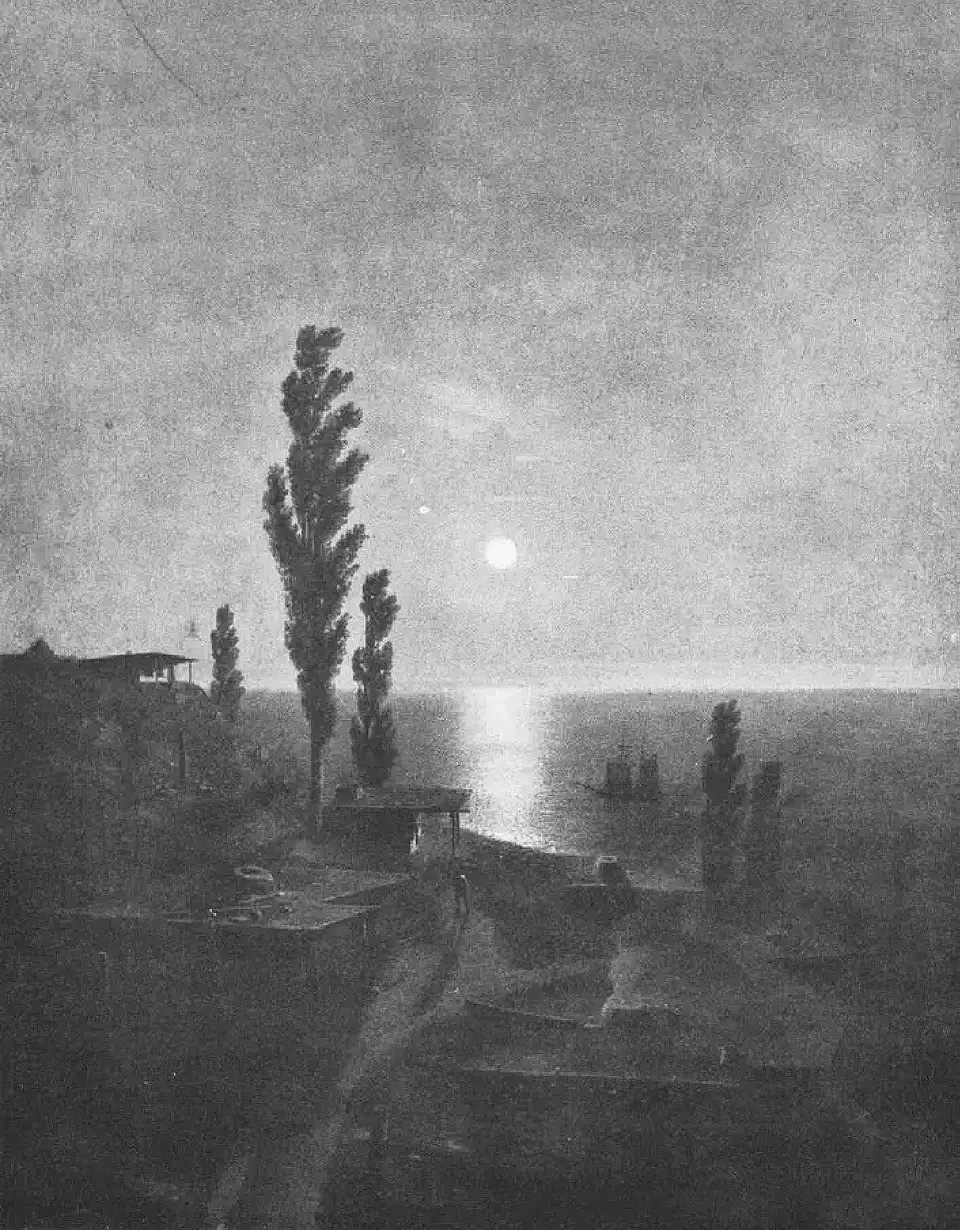
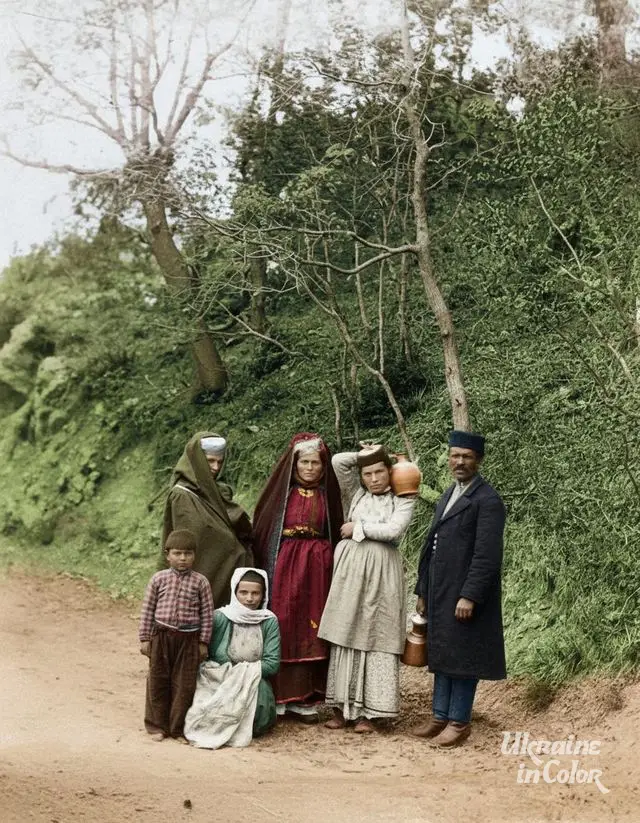
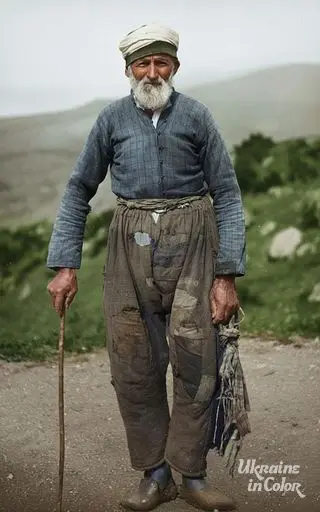
On the left is a Nogai Tatar, on the right is a Crimean Tatar.
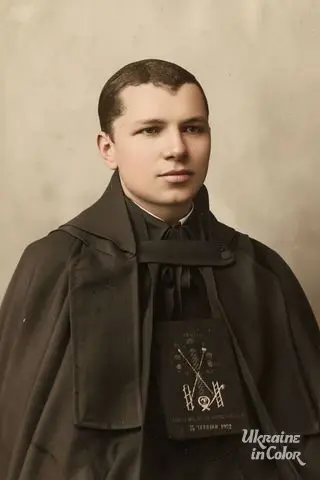
Father Mykola Lysko - one of the first priests who arrived in the Ukrainian community of the first settlers of the state of Paraná in Brazil
A man from the Ukrainian community, the first immigrants in Brazil, demonstrates the art of having many children on the doorstep of his house
The first streets of Ukrainian emigrants in Brazil
Wedding family photo of the first immigrants from Ukraine in Brazil
Tree stumps in the first Ukrainian settlements in Brazil
The Gazdas are ready to explore the vast expanses of Brazil, which will later become the state of Paraná and the city of Prudentópolis.
Construction of the first roads in the state of Paraná, in the Brazilian jungle, by Ukrainian immigrants
Brazilian gentlemen from Ukraine in nice suits
Ukrainian farmers have greatly improved the Paraná region in terms of agro-industry, and this trend continues to this day.
The first Brazilian harvests of the first Ukrainians on the continent in wild conditions
Basilian priests Tiko and Diva
The first printing press in Prudentopolis
Father Athanasius. The grand opening of the new printing house in 1938.
Father Athanasius, 1st Ukrainian Church
Ostapiv Veselka Kom Ephraim Krevey
Church with carriages
Seminary of Mercia Guimaraes
Sister of Josaphat I. Raphael
Sister Josaphat College is expanding
Church of St. Basil the Blessed in Prudentopolis
Church of Hope Ternoski
Wedding of Anair Lopez
Dionysius Opushkevych Ukrainian Club
Another club November 12
Mércia Guimarães, Workers' Club і Cine Oriente
Father Athanasius' Immigrants
Father Atanasio's Immigrant Barracks 1896
Marcelo Escolinha Immigrants
Father Atanasio's Immigrant Barracks
Brazilian Ukrainian Immigrants in senador Correa Machado
Snake Island by Carlo Bossoli.The painting depicts a stormy sea with a ship, possibly HMS Victory, and a smaller vessel near an island.
The island, historically known as the "Island of Achilles," is located in the Black Sea.
The painting is a public domain work of art.
General View of SevastopolCarlo Bossoli was an Italian-Swiss artist known for his detailed landscapes and battle scenes.
The work depicts the city and harbor of Sevastopol, a strategic Black Sea port.
Bossoli created a series of lithographs based on his travels through Crimea in the 1840s.
The image captures Sevastopol shortly after the Crimean War, which concluded in 1856, and shows the destruction from the siege that lasted from October 1854 to September 1855.
Bakhchysarai, the former capital of the Crimean KhanateThe painting depicts the Bakhchysarai Palace (also known as Khan's Palace or Hansaray), a 16th-century architectural complex that served as the residence of a succession of Crimean Khans. Built in 1532 by Sahib I Giray, it is considered the only preserved example of Crimean Tatar palace architecture in the world.
The palace complex was built with a blend of Ottoman, Persian, and Italian architectural styles. It originally included a mosque, a harem, a cemetery, living quarters, and gardens. The palace's famous "Fountain of Tears" was the subject of a narrative poem by Russian writer Alexander Pushkin.
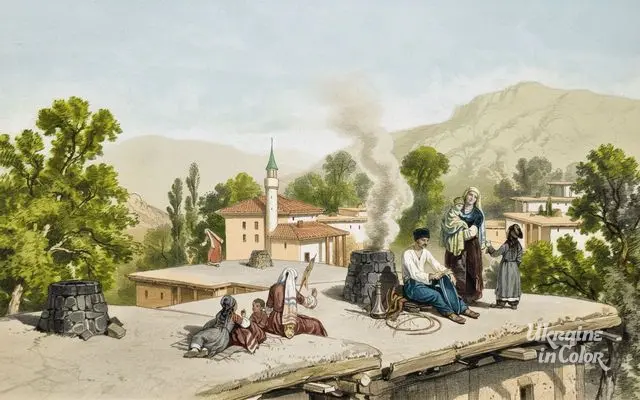
A Tartar House in the Village of AlupkaThe Crimean Tatar people have a rich cultural history, with their architecture showing influences from Islamic and Turkic motifs. The most prominent example is the Bakhchysarai Palace, the former capital of the Crimean Khanate. This palace, which served as a political and cultural center, is the world's only preserved example of Crimean Tatar palace architecture.
After the so called "russian federation" annexation of Crimea and the subsequent deportations in 1944, much of the Crimean Tatar cultural heritage was destroyed. However, artists and activists have been working to revive and preserve Crimean Tatar arts and traditions.
The interior of the "Tomb of Mithridates, near the Lazaretto of Kerch" renamed as "Royal Kurgan" by you know who, a monumental burial mound located in Kerch, CrimeaThe engraving is titled "Tomb of Mithridates, near the Lazaretto of Kerch", reflecting the historical and archaeological context of the time it was created. It's a lithograph, a type of printmaking, rather than a painting.
Kerch, seen from the high road to Eni-KaleA view of the city of Kerch, a port city in Crimea, seen from a high road that leads to the Yenikale Fortress. In the image, there are ships in the harbor, a city with buildings at the foot of a mountain, and people and horse-drawn carriages on the road in the foreground. The artwork is a color lithograph and is part of an album called "Views of Crimea
Kerch Bay from Mount MithridatesThe painting depicts a panoramic view of the Gulf of Kerch and the city of Kerch, located on the Crimean Peninsula, as seen from the top of Mount Mithridates. The scene includes the city with its harbor and ships, a church-like structure on a hillside, and a few figures with sheep in the foreground.
View of Karasubazar ( Bilohirsk )The work depicts a scenic view of the city of Karasubazar (now Bilohirsk) in the Caucasus region, with a focus on the bustling activity and vibrant culture of the area in the 19th century. The city was an important center of the Crimean Khanate. The painting captures a general view of the city, showing its buildings and the surrounding landscape with hills and mountains.
Tartars Travelling on the PlainsA caravan of Crimean Tatars traveling across a plain, possibly in the region of Crimea. The caravan includes both a horse-drawn carriage and camels, along with people on horseback.