T 152985 Sonia Delaunay Composition Orphique 1 Master
Le Coin Des Arts Sonia Delaunay Rythmes Circulaires 1980ca
SD 409 D10946 XBD Sonia Delaunay Solar Prism Collage
Neptune in Cancer.
Two Young Finnish Girls (1907)
1981.30 Simultaneous Dresses Three Women Forms Colors
SOnia Delaunay Robe Poem 1922
Robe Po Me No. 1328 Designed By Sonia Delaunay
Paper+Collage
Sonia Delaunay "Infinite Rhythm" - a dedication to Robert Delaunay 1934-1956Sonia Delaunay “Infinite Rhythm – Dedication to Robert Delaunay” (1934-1956). Gouache stencil on parchment paper. Size: 27 x 19.50 cm (46 x 37 cm in frame). Photo: Galerie Modernes
Exhibition poster, New York Cultural Center, April-May 1973
Lithography of colored discs based on Sonia Delaunay's motifs"Colored Discs", lithograph by Sonia Delaunay. Lithograph signed on the plate and numbered (No. 91/150), published by C & S, Luxembourg, circa 1975. Image size: 33 x 23 cm.
Exhibition poster, Galerie De Varenne, Paris, 1969"Sonia, Robert Delaunay and the Theatre", exhibition poster, Galerie Varennes, Paris, 1969. Published by Jacques Damas. Lithograph printed by Art Leto, Paris. The "Yellow Dancer" motif is based on the costume design for the play "Heart of Gas" by Tristan Tzara, staged in Paris in 1923. Photo: Galerie Modernes.
La prose du Transsibérien et de la petite Jehanne de France (1913)
"Woe to the Liar" Scene from the play. Act V The premiere took place in Odessa on August 21, 1918, and the premiere in Kyiv was on December 12, 1918.
Oleksandras Bohomazovas. „Peizažas. Geležinkelio sankasos šlaitas“. 1913‒1915
Olexander Bohomazov. "Female Portrait". 1915
Olexander Bohomazov. "Lake Saimaa". 1911
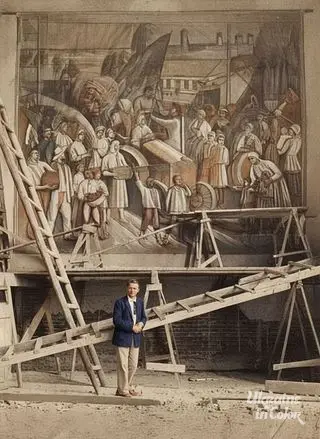
Ukrainian Pavilion at the 1933 World's Fair in Chicago.
Portrait of the American sculptor Louise Nevelson, taken by the celebrated fashion and portrait photographer Richard Avedon. The image was captured in New York in 1975.
Band New Order performing live in New York in 1981 at the Ukrainian National HomeA New Beginning: This performance was part of New Order’s first U.S. tour, staged a little over a year after Joy Division singer Ian Curtis’s death. It marked a crucial step in the band’s transition and the beginning of their effort to define an identity separate from their previous group. Musical Evolution: On this tour, New Order moved beyond Joy Division’s post‑punk austerity, embracing synthesizers and propulsive rhythms. In New York they unveiled an early, unreleased ten‑minute version of Temptation, drawing rave reviews and cementing their reputation at the forefront of post‑punk. Video Recording: The show—performed in 1981 in New York City—was filmed by Michael Shamberg and later released on VHS as Taras Shevchenko, capturing the band in a raw, transitional phase and becoming a vital document of their early career. The Ukrainian National Home’s name—and the portrait of poet Taras Shevchenko hanging behind the stage—were prominently displayed, underscoring the venue’s cultural co
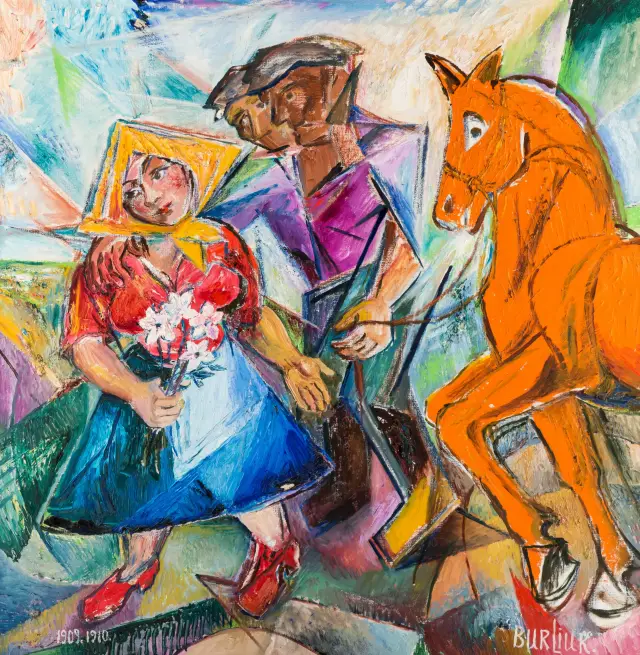
Interior of an Early Christian Church. A scene from the Inkerman Cave Monastery in CrimeaThe Inkerman Cave Monastery is a cave monastery located in a cliff near the mouth of the Black River in Sevastopol, Crimea.
The monastery was originally founded around the 6th century.
The image shows a group of people and goats inside the caves, with a view of the landscape outside through the archways.
The monastery was closed in 1931 and reopened in 1991, and is currently occupied by so called russian federation.
The costumes for the film Aelita: Queen of Mars were designed by the notable Cubo-Futurist painter and Ukrainian avant-garde artist, Olexandra Exter.
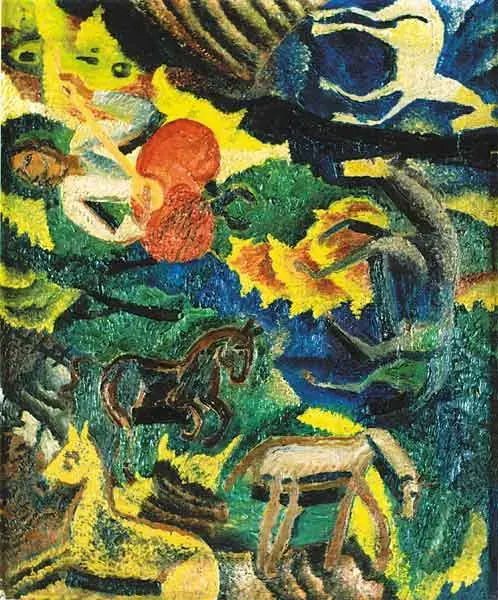
Serge Lifar, ‘élévation’The image depicts the dancer and choreographer Serge Lifar performing a jump, referred to as an "élévation," while a female dancer lies on the deck of what appears to be a ship. The photo was featured in the 1934 book Destin d'un Danseur.
Georges Lepape’s “Simultaneous” Vogue Cover, "Simultaneous" dress designed by artist Sonia Delaunay. Vogue magazine from Late January 1925, featuring a work by French illustrator Georges Lepape. The illustration depicts a woman in a geometric, colorful outfit standing next to a car with a similar pattern. The dress is a "Simultaneous" dress designed by artist Sonia Delaunay.
This is a VHS video tape of the band New Order's live performance, titled Taras Shevchenko.The performance was recorded live at the Ukrainian National Home in New York City on November 18, 1981.
The cover art features an image of Ukrainian poet and artist Taras Shevchenko.
The item is a cult classic and can be found on auction sites like eBay.
The tape is sold as-is due to its age, and its functionality may not be guaranteed.
Сoncrete relief on the stairs in the interior of the "Dnipro" sanatorium (now known as Druzhba) in Yevpatoria, Crimea. The artwork was created by Ukrainian artist Ernest Kotkov in the early 1980s.
Anna Sten in Nana (1934), dark room
Anna Sten in Nana (1934)
In the Pubdrawing by the Ukrainian artist and poet Taras Shevchenko. The work is a sepia drawing on paper. Taras Shevchenko was a significant figure in Ukrainian literature and art, known for his poetry and his role in the Ukrainian national revival. He created a large body of artwork, including portraits, landscapes, and compositions on various themes, using different mediums. The image depicts three men in a room, with one man standing shirtless and holding a paper, while the other two are seated.
Page from the Peresopnytsia Gospel, an illuminated manuscript of the four Gospels of the New Testament that is considered a significant cultural artifact of Ukraine.
Robinson Crusoe by Taras ShevchenkoThis drawing is an illustration of the literary character Robinson Crusoe, created in 1856 by the Ukrainian artist and writer Taras Shevchenko. The artwork is done on paper using sepia and bistre and is part of the collection at the Taras Shevchenko National Museum in Kyiv, Ukraine. Shevchenko was known to have a high appreciation for Daniel Defoe and his novel "Robinson Crusoe," and even advised both children and adults to read the book.
The drawing shows Crusoe, depicted with long hair and a hat, seated in a cave and reading a book. A goat can be seen behind him. The work was created during Shevchenko's exile, a period in which he was forbidden from writing or drawing. The artist was a prominent figure of the Ukrainian national revival.