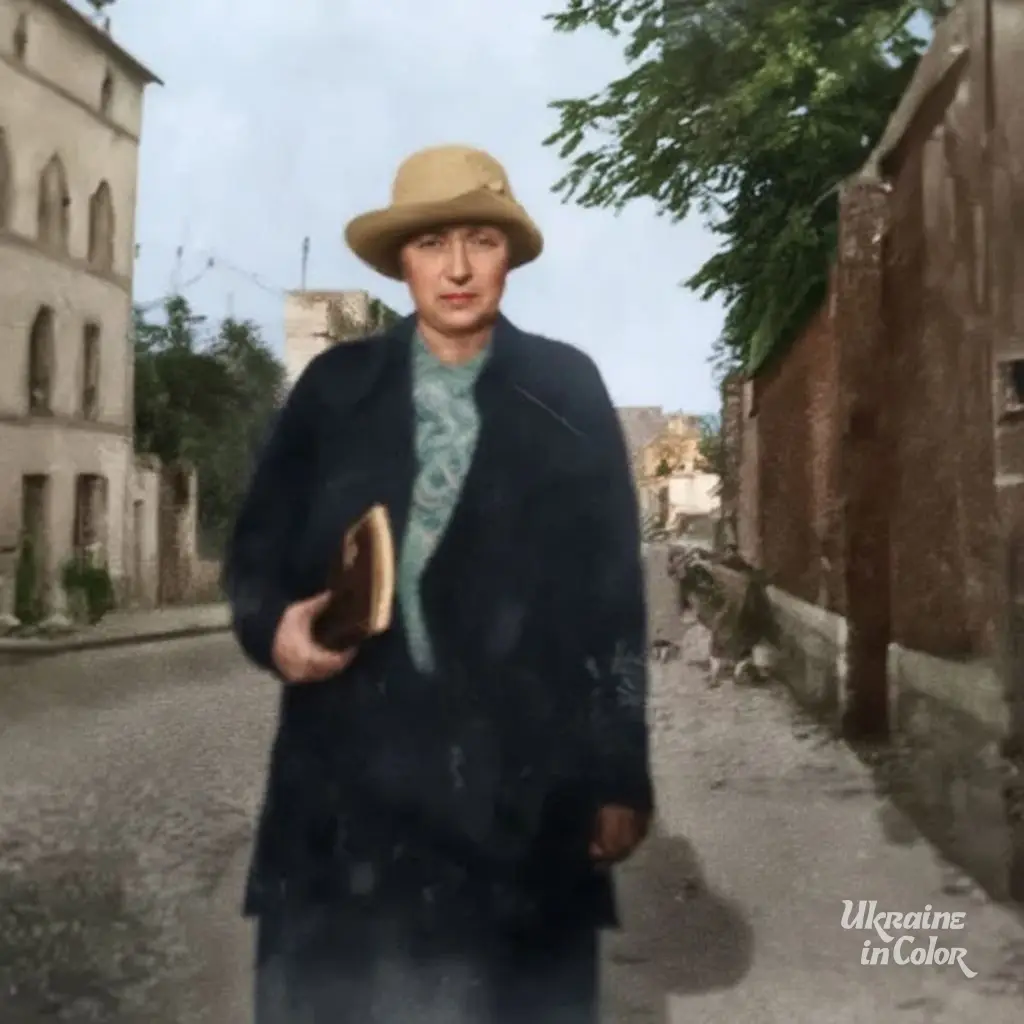
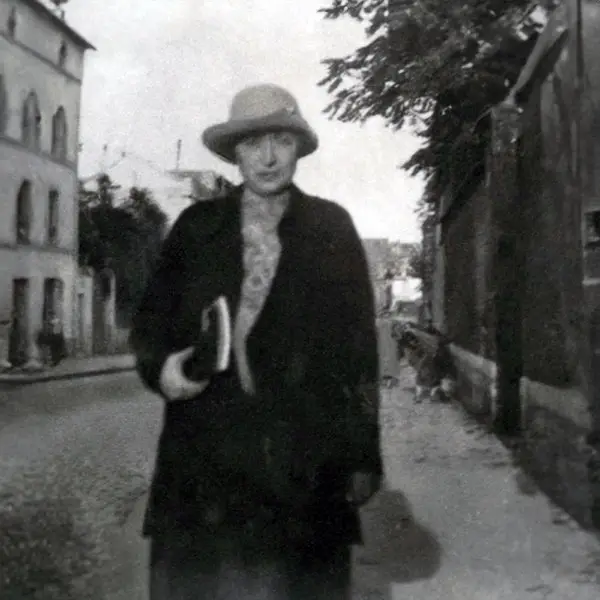
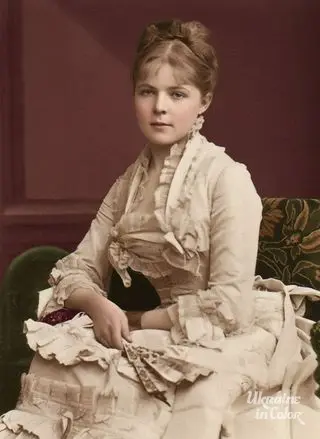
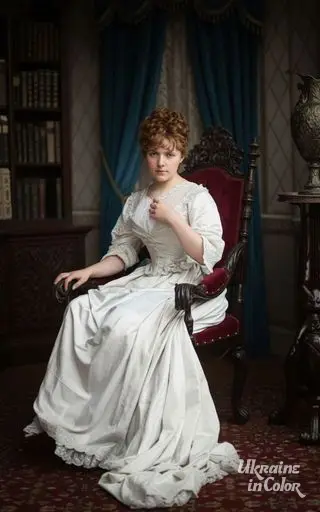
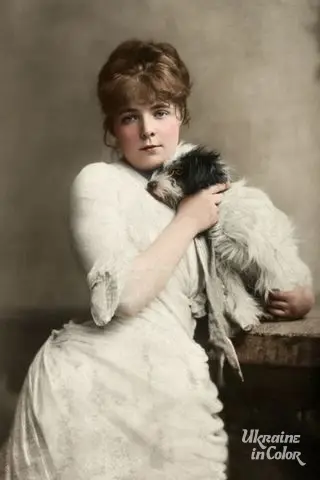
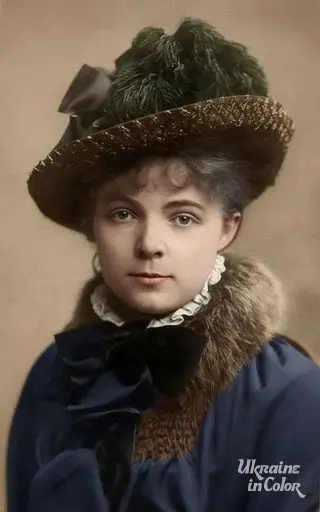
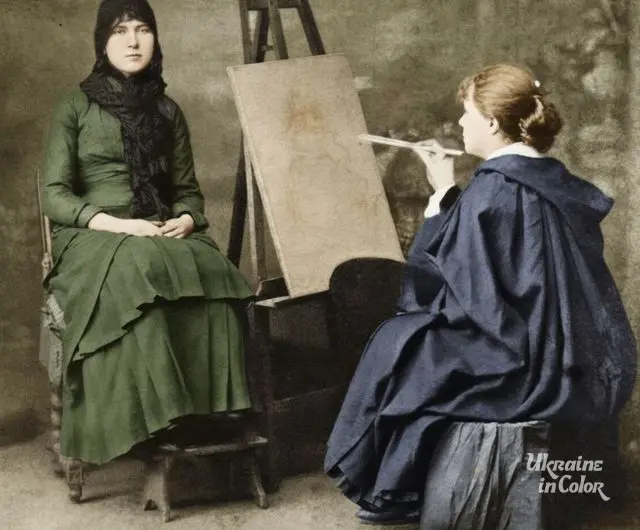
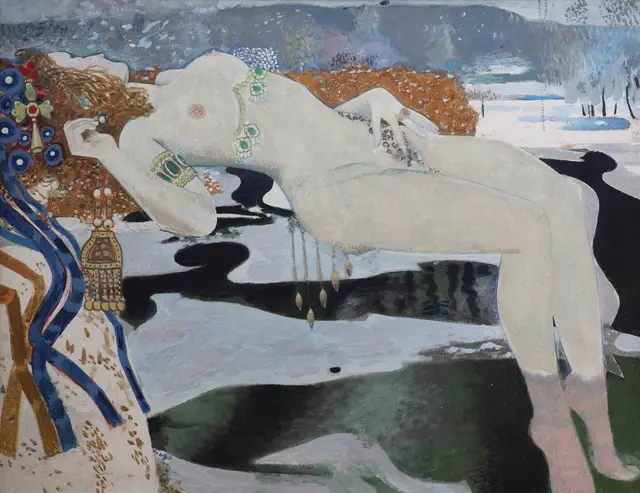
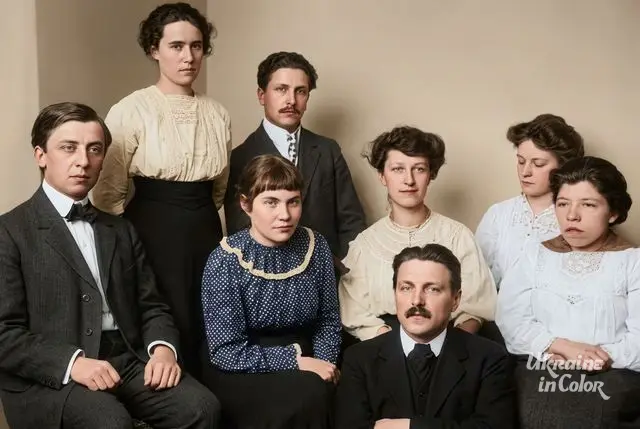
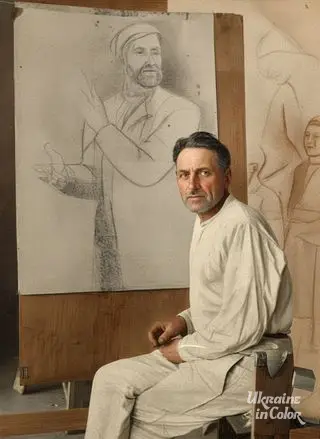
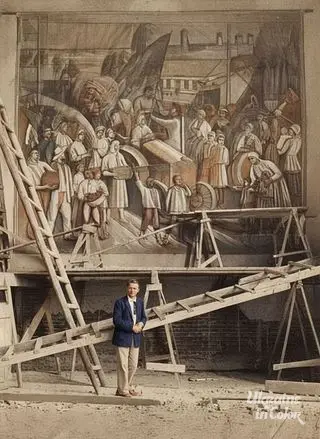
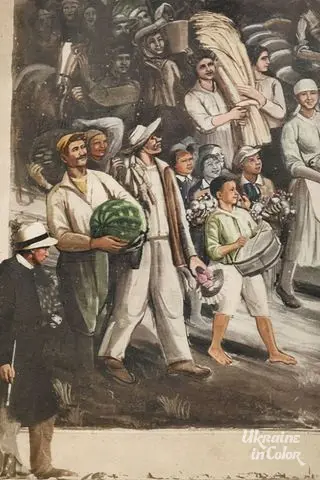
Depicted:Oleksandra EksterOriginal: All rights reservedRestoration: All rights reserved
Costume for the Rio Carnival, 1928
Color prisms unknown
Group of women, 1925
Kaleidoscopic colours
T 152985 Sonia Delaunay Composition Orphique 1 Master
Le Coin Des Arts Sonia Delaunay Rythmes Circulaires 1980ca
SD 409 D10946 XBD Sonia Delaunay Solar Prism Collage
Neptune in Cancer.
Two Young Finnish Girls (1907)
1981.30 Simultaneous Dresses Three Women Forms Colors
SOnia Delaunay Robe Poem 1922
Robe Po Me No. 1328 Designed By Sonia Delaunay
Paper+Collage
Sonia Delaunay "Infinite Rhythm" - a dedication to Robert Delaunay 1934-1956Sonia Delaunay “Infinite Rhythm – Dedication to Robert Delaunay” (1934-1956). Gouache stencil on parchment paper. Size: 27 x 19.50 cm (46 x 37 cm in frame). Photo: Galerie Modernes
Exhibition poster, New York Cultural Center, April-May 1973
Lithography of colored discs based on Sonia Delaunay's motifs"Colored Discs", lithograph by Sonia Delaunay. Lithograph signed on the plate and numbered (No. 91/150), published by C & S, Luxembourg, circa 1975. Image size: 33 x 23 cm.
Exhibition poster, Galerie De Varenne, Paris, 1969"Sonia, Robert Delaunay and the Theatre", exhibition poster, Galerie Varennes, Paris, 1969. Published by Jacques Damas. Lithograph printed by Art Leto, Paris. The "Yellow Dancer" motif is based on the costume design for the play "Heart of Gas" by Tristan Tzara, staged in Paris in 1923. Photo: Galerie Modernes.
La prose du Transsibérien et de la petite Jehanne de France (1913)
Block 37 Proposal, Chicago, Illinois, PerspectiveBlock 37, the parcel of land in the heart of Chicago’s Loop bordered by State, Randolph, Dearborn, and Washington Streets has stood idle for years in spite of numerous ideas for the construction of new buildings. The redevelopment of the block was originally conceived by Mayor Richard J. Daley in the 1970s to transform the site of old, inferior, low-rise buildings into new and larger buildings with more intensive uses in keeping with the downtown area. The site has been the object of several unsuccessful attempts at development over the years. Architect Helmut Jahn, working for the joint venture development company FJV, prepared several schemes for the site between 1983 and 1987. All of these plans envisioned a giant atrium that would permit continuous movement of pedestrians throughout the block. The developers’ failure to secure a anchor tenant for the development—along with delays by the City and the worsening economic situation—cast doom on the project.
"Woe to the Liar" Scene from the play. Act V The premiere took place in Odessa on August 21, 1918, and the premiere in Kyiv was on December 12, 1918.
Oleksandras Bohomazovas. „Peizažas. Geležinkelio sankasos šlaitas“. 1913‒1915
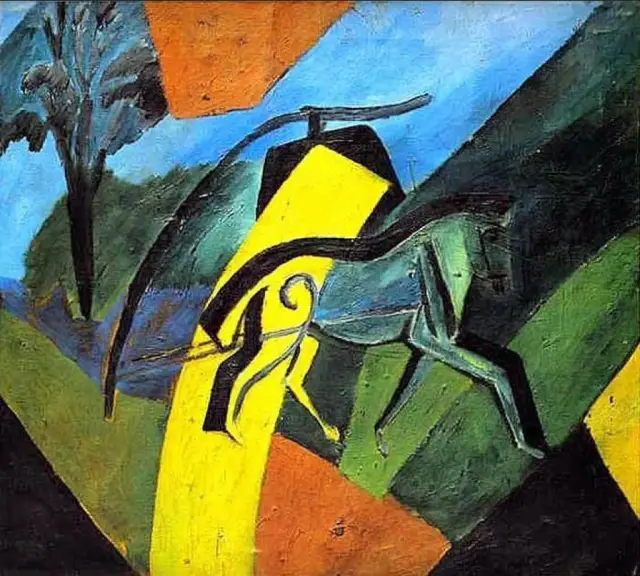
Olexander Bohomazov. "Female Portrait". 1915
Olexander Bohomazov. "Lake Saimaa". 1911
Ukrainian Pavilion at the 1933 World's Fair in Chicago.
Parishioners arrived, to protest the changes made to the church calendar in ChicagoBishop Jaroslav Gabro, of the Ukrainian rite of the Roman Catholic Church, was absent from his Oak Park home when parishioners arrived on Jan. 20, 1968, to protest the changes made to the church calendar.

People of Ukrainian descent march at Western and Rice avenues on Oct. 13, 1963, in remembrance of the 30th anniversary of the Holodomor, a famine in Soviet Ukraine that killed millions of Ukrainians.People of Ukrainian descent march at Western and Rice avenues on Oct. 13, 1963, in remembrance of the 30th anniversary of the Holodomor, a famine in Soviet Ukraine that killed millions of Ukrainians.
The anti-Soviet protest of Ukrainians in ChicagoRuslana Zavadovych, 8, displays a sign citing infamous incidents in Ukrainian history, including the Chernobyl nuclear plant disaster and Holodomor, at a Daley Plaza rally on June 9, 1986. The anti-Soviet protest was sponsored by the Ukrainian Congress Committee.
Zino Davidoff, a renowned Ukrainian-Swiss tobacconist and the founder of the Davidoff luxury brandThe photograph shows him standing in front of his cigar shop in Geneva, Switzerland.
Zino Davidoff's father, Henri Davidoff, a tobacco merchant, opened a tobacco shop in Geneva in 1911 after the family fled Ukraine. Zino later took over the business and was instrumental in its growth. He is credited with several innovations in the cigar industry, including the invention of the desktop humidor. During World War II, he famously acquired the cigar stock from Paris to protect it from the invading forces, which cemented his reputation as a key figure in the European tobacco trade. The Davidoff brand, now owned by Oettinger Davidoff AG, has expanded beyond cigars to include a range of luxury products such as fragrances, leather goods, and accessories.
Portrait of the American sculptor Louise Nevelson, taken by the celebrated fashion and portrait photographer Richard Avedon. The image was captured in New York in 1975.
Band New Order performing live in New York in 1981 at the Ukrainian National HomeA New Beginning: This performance was part of New Order’s first U.S. tour, staged a little over a year after Joy Division singer Ian Curtis’s death. It marked a crucial step in the band’s transition and the beginning of their effort to define an identity separate from their previous group. Musical Evolution: On this tour, New Order moved beyond Joy Division’s post‑punk austerity, embracing synthesizers and propulsive rhythms. In New York they unveiled an early, unreleased ten‑minute version of Temptation, drawing rave reviews and cementing their reputation at the forefront of post‑punk. Video Recording: The show—performed in 1981 in New York City—was filmed by Michael Shamberg and later released on VHS as Taras Shevchenko, capturing the band in a raw, transitional phase and becoming a vital document of their early career. The Ukrainian National Home’s name—and the portrait of poet Taras Shevchenko hanging behind the stage—were prominently displayed, underscoring the venue’s cultural co
Interior of an Early Christian Church. A scene from the Inkerman Cave Monastery in CrimeaThe Inkerman Cave Monastery is a cave monastery located in a cliff near the mouth of the Black River in Sevastopol, Crimea.
The monastery was originally founded around the 6th century.
The image shows a group of people and goats inside the caves, with a view of the landscape outside through the archways.
The monastery was closed in 1931 and reopened in 1991, and is currently occupied by so called russian federation.
Two models in Sonia Delaunay's boulevard Malesherbes studioThe photograph depicts two models wearing designs by artist and designer Sonia Delaunay. The outfits are described as beachwear, swimwear, or clothing with geometric patterns. One model holds an umbrella, also designed by Delaunay. The designs are part of the "Simultaneous" line, which reflects Delaunay's artistic theory of using bold, contrasting colors and geometric shapes to create movement and harmony. The clothing was created to suit the real lives of women, allowing for freedom of movement.
The costumes for the film Aelita: Queen of Mars were designed by the notable Cubo-Futurist painter and Ukrainian avant-garde artist, Olexandra Exter.
Serge Lifar, ‘élévation’The image depicts the dancer and choreographer Serge Lifar performing a jump, referred to as an "élévation," while a female dancer lies on the deck of what appears to be a ship. The photo was featured in the 1934 book Destin d'un Danseur.
Georges Lepape’s “Simultaneous” Vogue Cover, "Simultaneous" dress designed by artist Sonia Delaunay. Vogue magazine from Late January 1925, featuring a work by French illustrator Georges Lepape. The illustration depicts a woman in a geometric, colorful outfit standing next to a car with a similar pattern. The dress is a "Simultaneous" dress designed by artist Sonia Delaunay.
Jim Morrison in Ukrainian embroideryThis photograph shows musician Jim Morrison, the lead singer of the rock band The Doors, in 1966. The photo was taken by Guy Webster. The shirt he is wearing is a traditional Ukrainian embroidered shirt known as a vyshyvanka. According to some accounts, the shirt may have been a gift from artist Andy Warhol, who was of Ukrainian descent.