Українська
    Get early access
    Copyright© 2026
    Designed and built by Ukraine in Color team
    Follow for more:Instagram

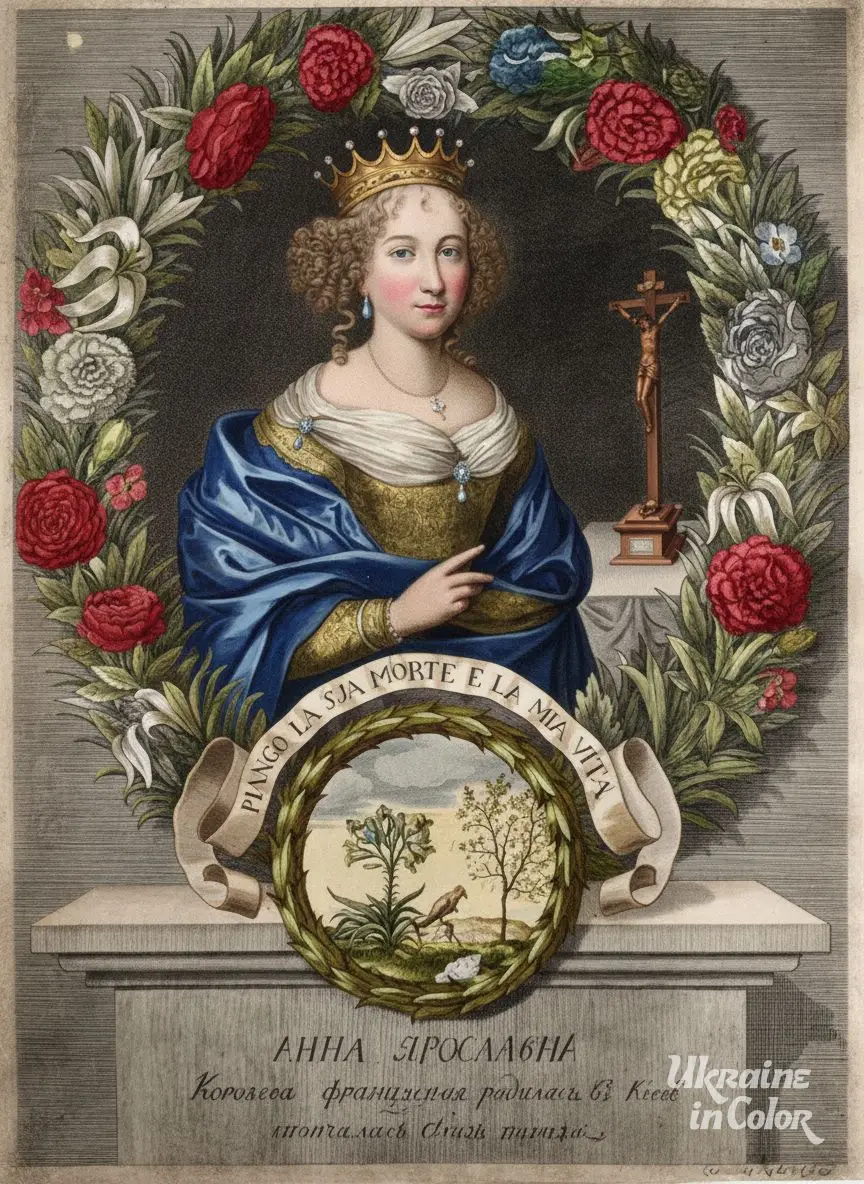
    Princess Anna Yaroslavna of Kyiv

    Anne of Kiev, or Anna Yaroslavna, was born just under one thousand years ago in Rus, present day Ukraine, daughter of Yarsoslav the Wise, Grand Prince of Kiev, and his second wife Ingegerd of Sweden.
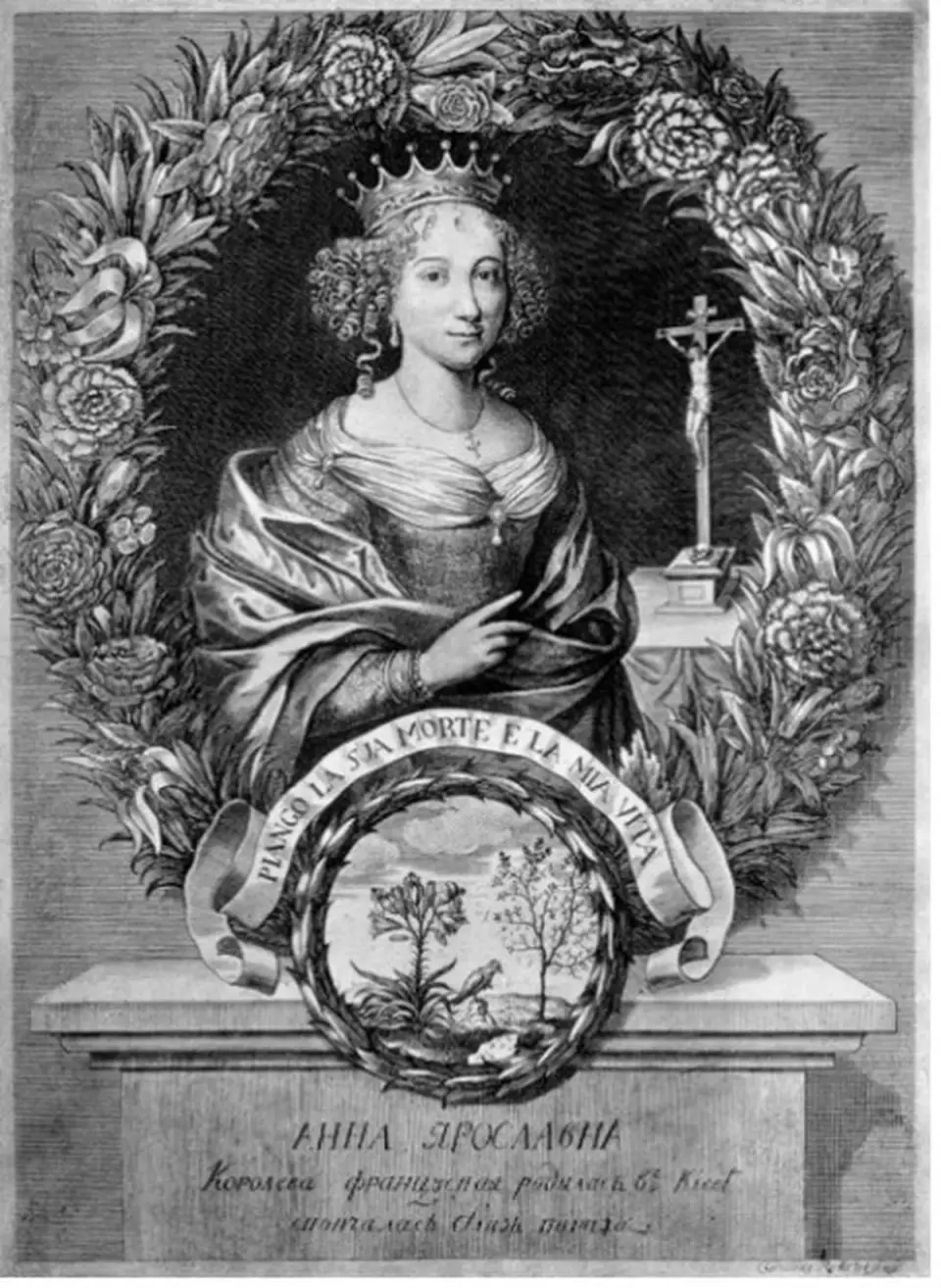
    Depicted:Anne of KievOriginal: All rights reservedRestoration: All rights reserved
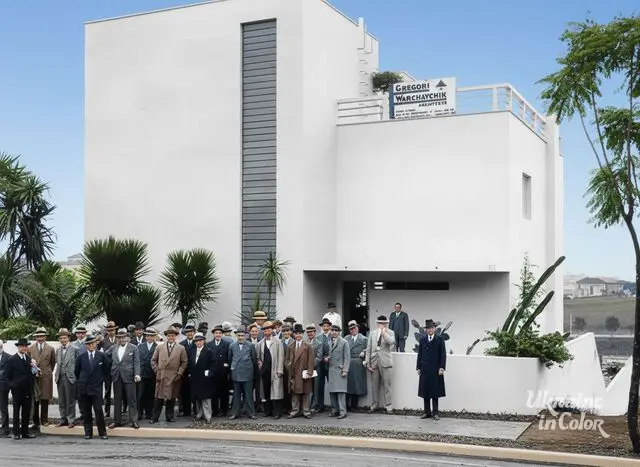
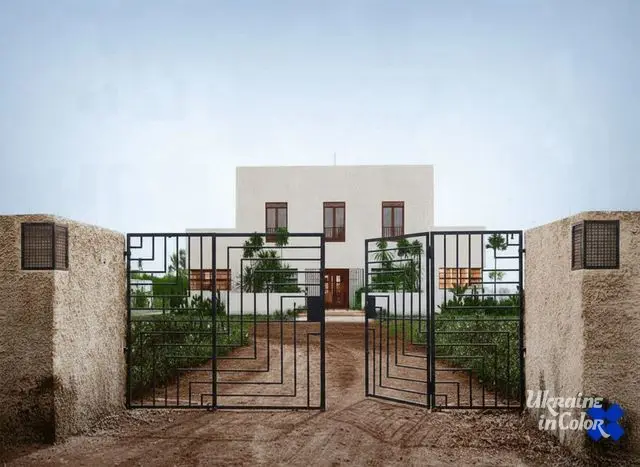
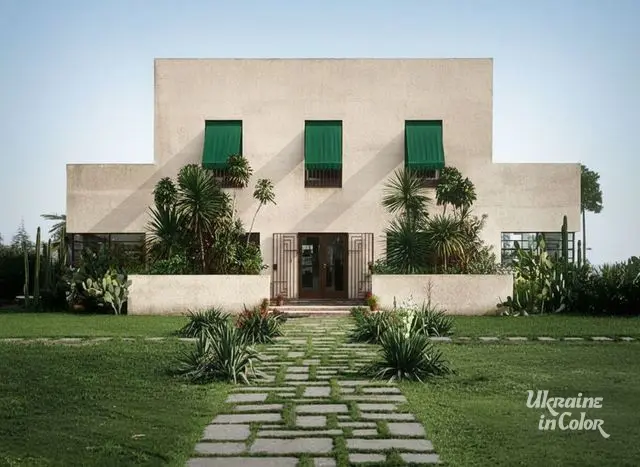
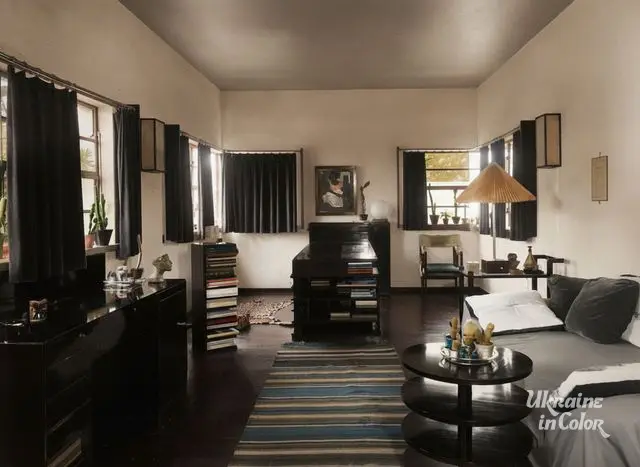
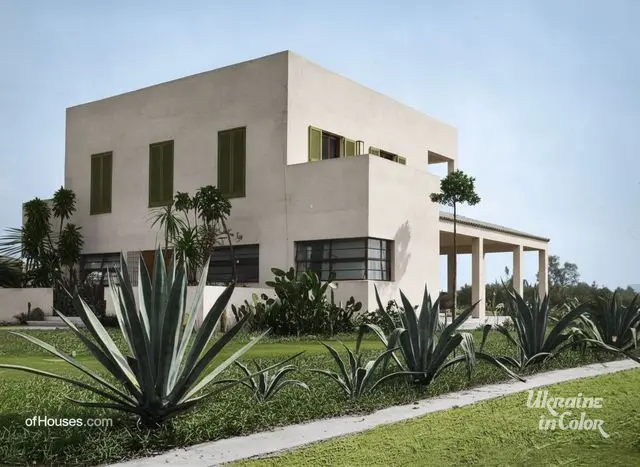
    Classical Architecture: Modernist House on Rua Bahia
    Classical Architecture: Modernist House on Rua Bahia
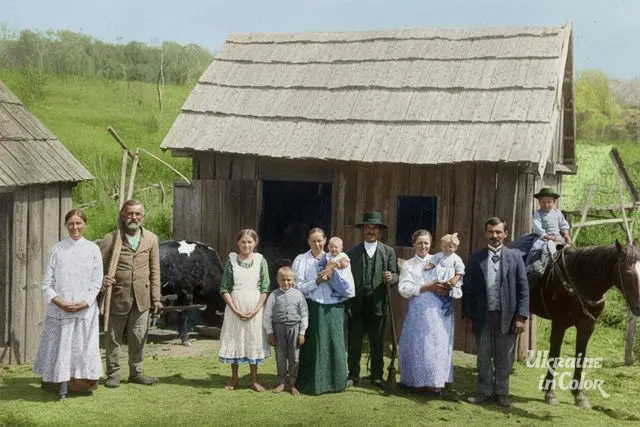
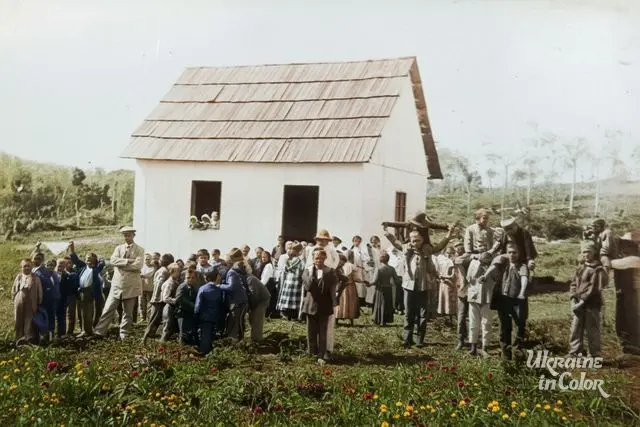
    Padre AtanáSio Imigrantes5
    Padre AtanáSio Imigrantes5
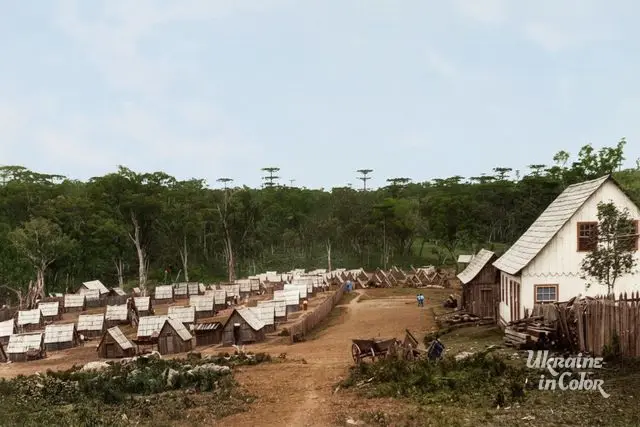
    Padre AtanáSio Barracas Dos Imigrantes 1896
    Padre AtanáSio Barracas Dos Imigrantes 1896
    Padre AtanáSio BarracãO Dos Imigrantes
    Padre AtanáSio BarracãO Dos Imigrantes
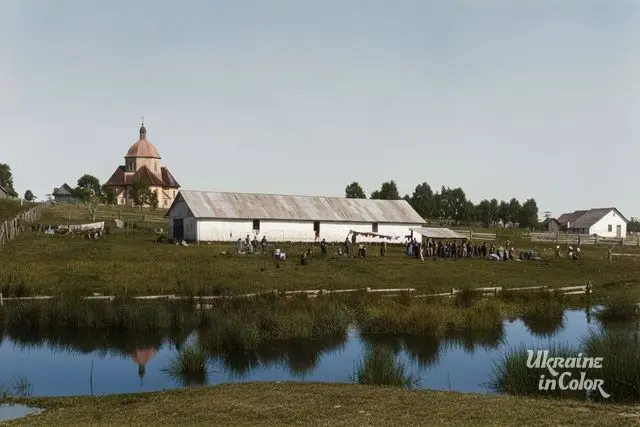
    Zito Imigrantes Em Senador Correa Machado2
    Zito Imigrantes Em Senador Correa Machado2
    Tumblr NzhwjehkAI1twhq1io2 1280
    Tumblr NzhwjehkAI1twhq1io2 1280
    Tumblr NzhwjehkAI1twhq1io7 1280
    Tumblr NzhwjehkAI1twhq1io7 1280
    Tumblr NzhwjehkAI1twhq1io6 1280
    Tumblr NzhwjehkAI1twhq1io6 1280
    Tumblr NzhwjehkAI1twhq1io5 1280
    Tumblr NzhwjehkAI1twhq1io5 1280
    Tumblr NzhwjehkAI1twhq1io4 1280
    Tumblr NzhwjehkAI1twhq1io4 1280
    Tumblr NzhwjehkAI1twhq1io1 640
    Tumblr NzhwjehkAI1twhq1io1 640
    Tumblr NzhwjehkAI1twhq1io9 1280
    Tumblr NzhwjehkAI1twhq1io9 1280
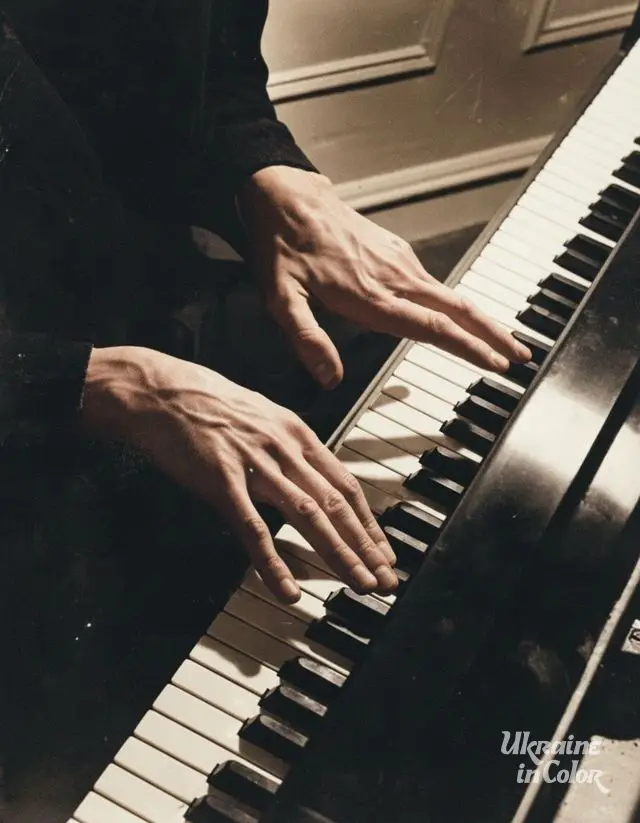
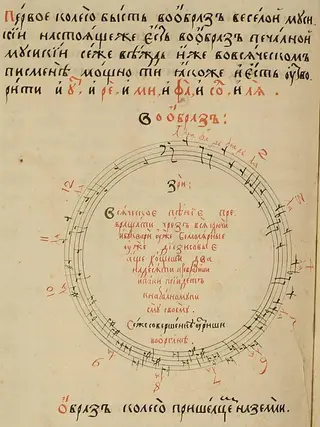
    fragment of "Musical Grammar" by M. Dyletsky.
    fragment of "Musical Grammar" by M. Dyletsky.A native of Kyiv, Mykola Dyletsky is called the creator of the Western school of partes music, which gave the world a number of outstanding composers. He wrote the theoretical work “Musical Grammar” — a monument of the Ukrainian Baroque — which was published exactly 350 years ago in Vilna (now Vilnius). In it, Dyletsky explained in detail the technical features of partes singing and composition. And what is important! In this work, he was the first in the world to describe the circle of fifths — as a graphic diagram by which a musician can trace the harmonic connections between all major and minor keys of 12 notes. For composers, this work made it easier to write music. This is really worth paying attention to… The work “The Resurrection Canon” by Mykola Dyletsky. Please listen.
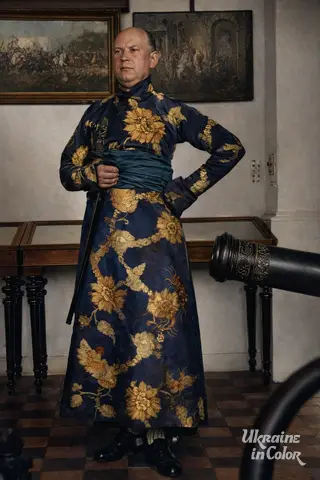
    Living Echo of the Cossack Elite: Georgiy Narbut in Paraska Apostol’s Kontusz with Kelep and Colonel Miloradovych
    Living Echo of the Cossack Elite: Georgiy Narbut in Paraska Apostol’s Kontusz with Kelep and Colonel MiloradovychIn the photograph, Georgiy Narbut stands in the Cossack hall of the Tarnovsky Museum (now a room of the Chernihiv Regional Library for Youth), fully immersed in a historical Ukrainian image. He is dressed in the kontusz of Paraska Apostol, daughter of Hetman Danylo Apostol, holding a kelep in his right hand, while to his right stands Colonel Mykhailo “Cannon” Miloradovych. This staged yet documentary scene shows Narbut not just studying Cossack-era artifacts, but literally wearing them, turning himself into a living embodiment of the Ukrainian noble-Cossack past.
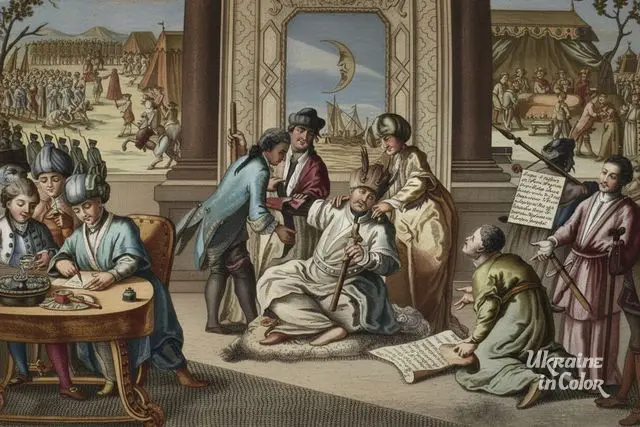
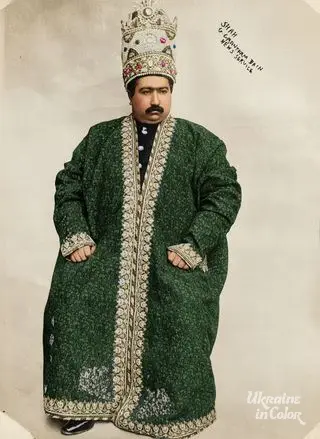
    About the Shah of Persia in Odessa
    About the Shah of Persia in OdessaShah Mohammed Ali arrived in Odessa on September 10, 1909, fleeing the Persian revolution. He was given a two-story Gothic palace of Brzhozovsky on Gogol Street with 40 rooms to live in; the rent was 12,000 rubles per year and was not paid by him personally. The legend of the “shah’s harem in Odessa” is not confirmed by the press of the time: the media covered his life in detail, but did not write about the harem. In 1911, he secretly left, trying to regain the throne, and was defeated. There are references that in 1912 he was briefly returned to Odessa, but in 1913 the former ruler was no longer in the city, which contradicts later claims that he left only in 1920. Sources (not Wikipedia) are needed regarding his further movements after 1913.
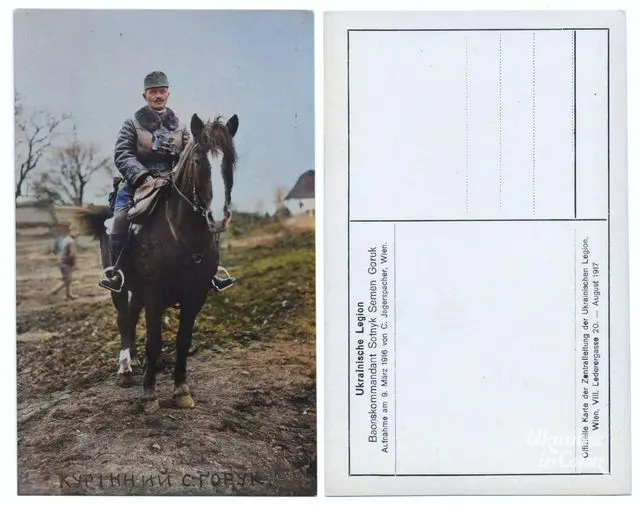
    Kurinny S. Goruk
    Kurinny S. Goruk
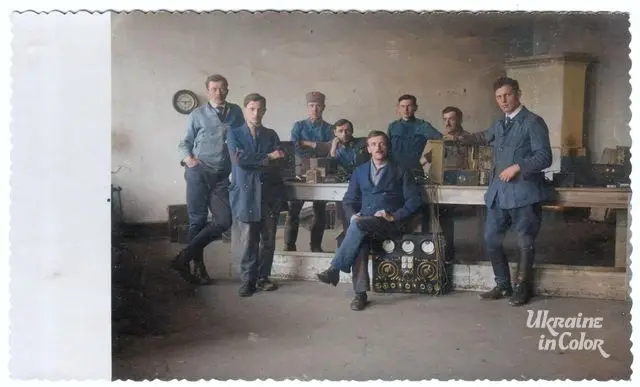
    Sich riflemen signalmen with the German radiotelegraph "Telefunken"
    Sich riflemen signalmen with the German radiotelegraph "Telefunken"
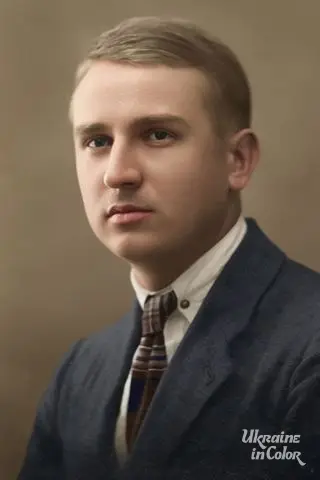
    Mykola Zakharovych Levchenko
    Mykola Zakharovych Levchenko
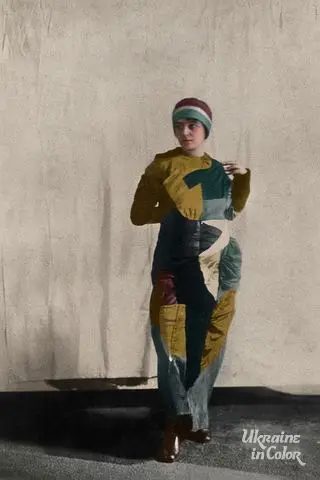
    Sonia Delaunay in Simultaneous dress
    Sonia Delaunay in Simultaneous dress
    Block 37 Proposal, Chicago, Illinois, Perspective
    Block 37 Proposal, Chicago, Illinois, PerspectiveBlock 37, the parcel of land in the heart of Chicago’s Loop bordered by State, Randolph, Dearborn, and Washington Streets has stood idle for years in spite of numerous ideas for the construction of new buildings. The redevelopment of the block was originally conceived by Mayor Richard J. Daley in the 1970s to transform the site of old, inferior, low-rise buildings into new and larger buildings with more intensive uses in keeping with the downtown area. The site has been the object of several unsuccessful attempts at development over the years. Architect Helmut Jahn, working for the joint venture development company FJV, prepared several schemes for the site between 1983 and 1987. All of these plans envisioned a giant atrium that would permit continuous movement of pedestrians throughout the block. The developers’ failure to secure a anchor tenant for the development—along with delays by the City and the worsening economic situation—cast doom on the project.
    Raising The Flag On Iwo Jima
    Raising The Flag On Iwo JimaMichael Strank is an American soldier of Ukrainian origin, a symbol of the US victory in World War II. He was born on November 10, 1919 in Oryabyn (Pryashiv region), emigrated to the United States in the 1920s; his father worked in the mines of Pennsylvania. After school (1937), he served in the Civilian Environmental Protection Corps, working on highways. In October 1939, he joined the Marine Corps; participated in battles on the Russell and Bougainville Islands (1942–1944). The commander of the detachment during the Battle of Iwo Jima landed on Iwo Jima on February 19, 1945 and raised a large flag on Mount Suribachi - a photo by Joe Rosenthal "Raising the Flag on Iwo Jima" became an icon of the war. By the end of March, three of the six, including Strank, were dead (March 1, 1945). Buried in Arlington; Marine Corps Memorial based on photo. Awards: Bronze Star (V), Purple Heart, Presidential Citation, Asiatic Pacific Campaign Medal. Played by Barry Pepper in the film Flags of Our Fathers. In Ukraine: mini-sculpture in Uzhgorod (2015), sculpture in the Museum of the Formation
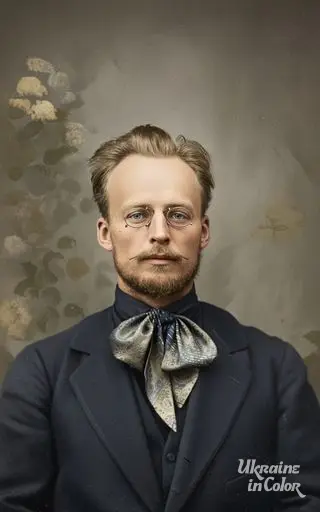
    Oleksandr Bogomazov
    Oleksandr Bogomazov
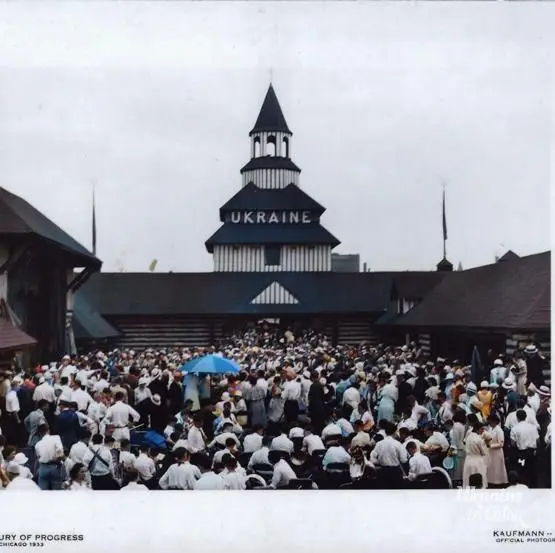
    Ukrainian Pavilion at the 1933 World's Fair in Chicago.
    Ukrainian Pavilion at the 1933 World's Fair in Chicago.
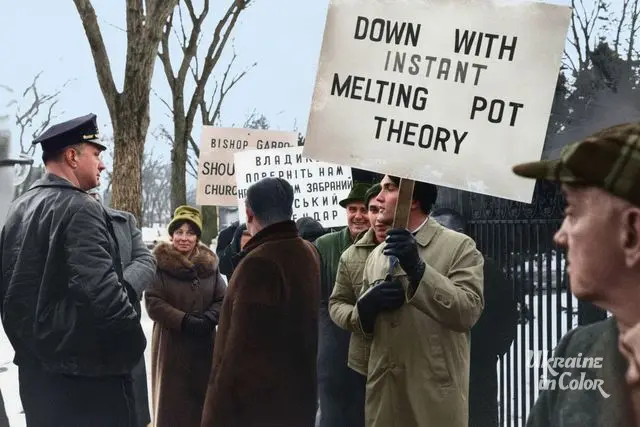
    Parishioners arrived, to protest the changes made to the church calendar in Chicago
    Parishioners arrived, to protest the changes made to the church calendar in ChicagoBishop Jaroslav Gabro, of the Ukrainian rite of the Roman Catholic Church, was absent from his Oak Park home when parishioners arrived on Jan. 20, 1968, to protest the changes made to the church calendar.
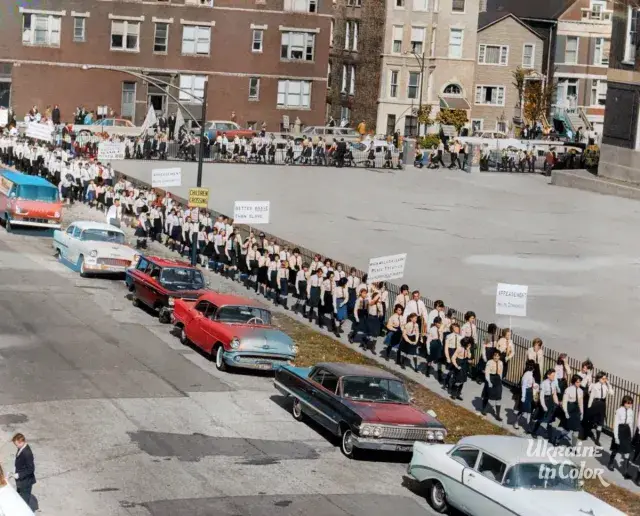
    People of Ukrainian descent march at Western and Rice avenues on Oct. 13, 1963, in remembrance of the 30th anniversary of the Holodomor, a famine in Soviet Ukraine that killed millions of Ukrainians.
    People of Ukrainian descent march at Western and Rice avenues on Oct. 13, 1963, in remembrance of the 30th anniversary of the Holodomor, a famine in Soviet Ukraine that killed millions of Ukrainians.People of Ukrainian descent march at Western and Rice avenues on Oct. 13, 1963, in remembrance of the 30th anniversary of the Holodomor, a famine in Soviet Ukraine that killed millions of Ukrainians.
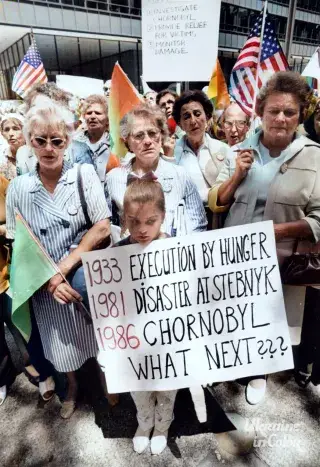
    The anti-Soviet protest of Ukrainians in Chicago
    The anti-Soviet protest of Ukrainians in ChicagoRuslana Zavadovych, 8, displays a sign citing infamous incidents in Ukrainian history, including the Chernobyl nuclear plant disaster and Holodomor, at a Daley Plaza rally on June 9, 1986. The anti-Soviet protest was sponsored by the Ukrainian Congress Committee.
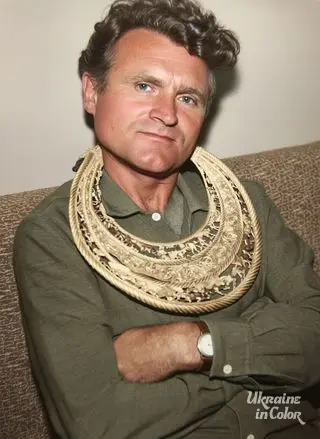
    Ukrainian archaeologist Borys Mozolevski with the Scythian Golden Pectoral, which he discovered in 1971.
    Ukrainian archaeologist Borys Mozolevski with the Scythian Golden Pectoral, which he discovered in 1971.The Golden Pectoral is a solid gold neckpiece from the 4th century BC. It was found in the Tovsta Mohyla, an ancient Scythian burial mound in southern Ukraine. The artifact is considered one of the most significant archaeological finds of the 20th century. Mozolevski's discovery is a rare example of artistry and influential discovery.
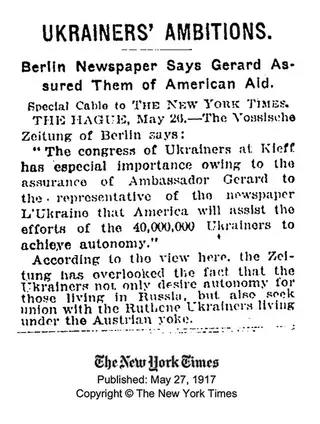
    Ukrainers Ambitions. New York Times article 1917
    Ukrainers Ambitions. New York Times article 1917“UKRAINERS’ AMBITIONS.” Special Cable to THE NEW YORK TIMES. May 27, 1917. “THE HAGUE, May 26.—The Vossische Zeitung of Berlin says: ‘The congress of Ukrainers at Kieff has especial importance owing to the assurance of Ambassador Gerard to the representative of the newspaper L’Ukraine that America will assist the efforts of the 40,000,000 Ukrainers to achieve autonomy.’
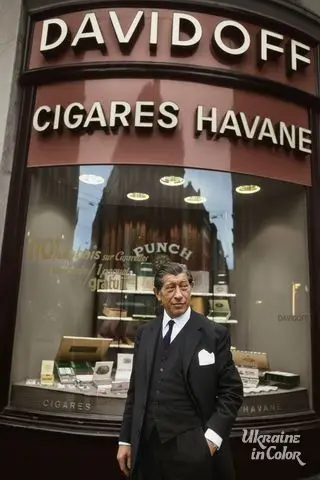
    Zino Davidoff, a renowned Ukrainian-Swiss tobacconist and the founder of the Davidoff luxury brand
    Zino Davidoff, a renowned Ukrainian-Swiss tobacconist and the founder of the Davidoff luxury brandThe photograph shows him standing in front of his cigar shop in Geneva, Switzerland. Zino Davidoff's father, Henri Davidoff, a tobacco merchant, opened a tobacco shop in Geneva in 1911 after the family fled Ukraine. Zino later took over the business and was instrumental in its growth. He is credited with several innovations in the cigar industry, including the invention of the desktop humidor. During World War II, he famously acquired the cigar stock from Paris to protect it from the invading forces, which cemented his reputation as a key figure in the European tobacco trade. The Davidoff brand, now owned by Oettinger Davidoff AG, has expanded beyond cigars to include a range of luxury products such as fragrances, leather goods, and accessories.
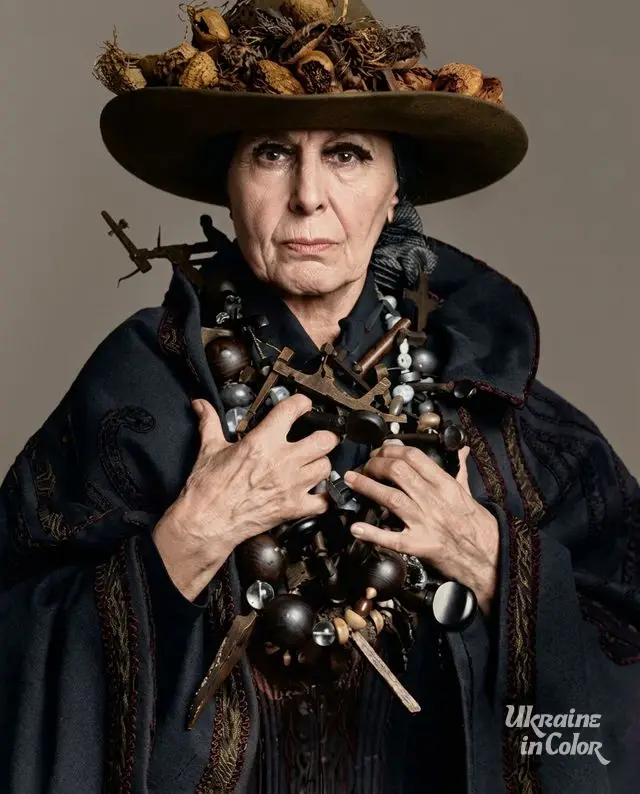
    Portrait of the American sculptor Louise Nevelson, taken by the celebrated fashion and portrait photographer Richard Avedon. The image was captured in New York in 1975.
    Portrait of the American sculptor Louise Nevelson, taken by the celebrated fashion and portrait photographer Richard Avedon. The image was captured in New York in 1975.
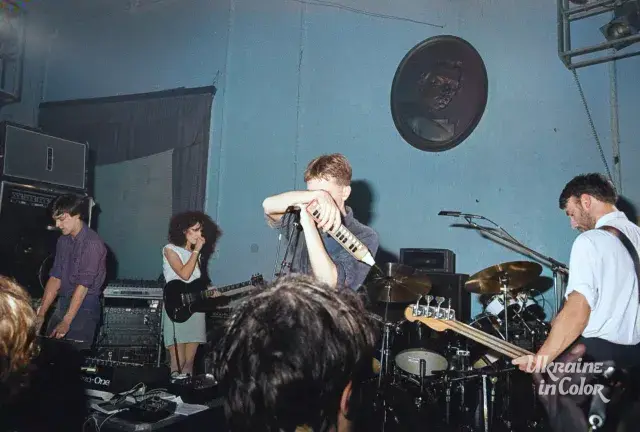
    Band New Order performing live in New York in 1981 at the Ukrainian National Home
    Band New Order performing live in New York in 1981 at the Ukrainian National HomeA New Beginning: This performance was part of New Order’s first U.S. tour, staged a little over a year after Joy Division singer Ian Curtis’s death. It marked a crucial step in the band’s transition and the beginning of their effort to define an identity separate from their previous group. Musical Evolution: On this tour, New Order moved beyond Joy Division’s post‑punk austerity, embracing synthesizers and propulsive rhythms. In New York they unveiled an early, unreleased ten‑minute version of Temptation, drawing rave reviews and cementing their reputation at the forefront of post‑punk. Video Recording: The show—performed in 1981 in New York City—was filmed by Michael Shamberg and later released on VHS as Taras Shevchenko, capturing the band in a raw, transitional phase and becoming a vital document of their early career. The Ukrainian National Home’s name—and the portrait of poet Taras Shevchenko hanging behind the stage—were prominently displayed, underscoring the venue’s cultural co
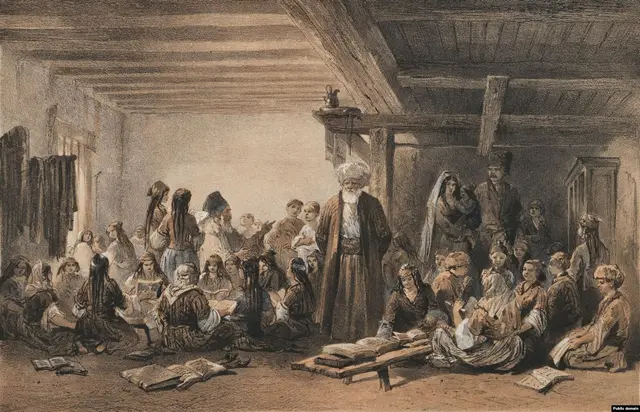
    Tatar Children's School
    Tatar Children's School
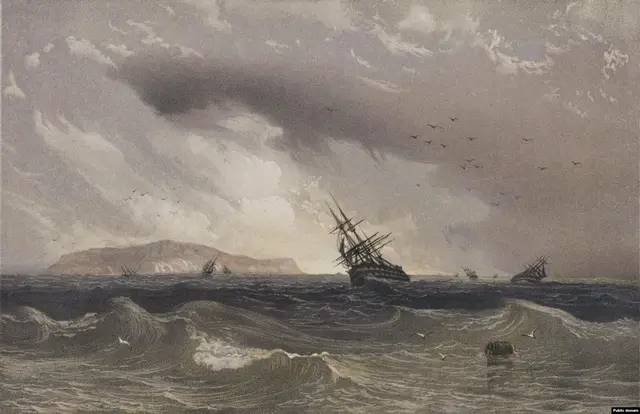
    Snake Island by Carlo Bossoli.
    Snake Island by Carlo Bossoli.The painting depicts a stormy sea with a ship, possibly HMS Victory, and a smaller vessel near an island. The island, historically known as the "Island of Achilles," is located in the Black Sea. The painting is a public domain work of art.
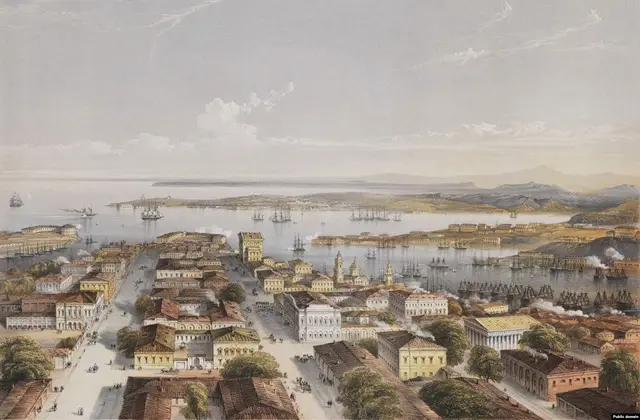
    General View of Sevastopol
    General View of SevastopolCarlo Bossoli was an Italian-Swiss artist known for his detailed landscapes and battle scenes. The work depicts the city and harbor of Sevastopol, a strategic Black Sea port. Bossoli created a series of lithographs based on his travels through Crimea in the 1840s. The image captures Sevastopol shortly after the Crimean War, which concluded in 1856, and shows the destruction from the siege that lasted from October 1854 to September 1855.
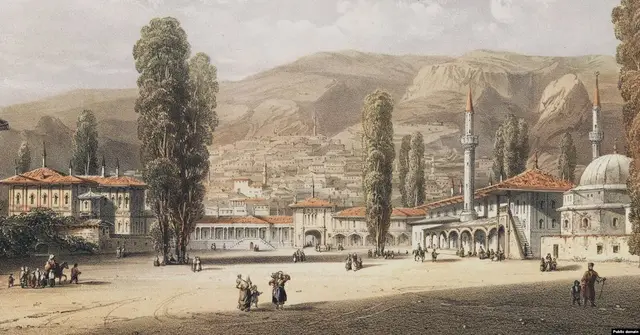
    Bakhchysarai, the former capital of the Crimean Khanate
    Bakhchysarai, the former capital of the Crimean KhanateThe painting depicts the Bakhchysarai Palace (also known as Khan's Palace or Hansaray), a 16th-century architectural complex that served as the residence of a succession of Crimean Khans. Built in 1532 by Sahib I Giray, it is considered the only preserved example of Crimean Tatar palace architecture in the world. The palace complex was built with a blend of Ottoman, Persian, and Italian architectural styles. It originally included a mosque, a harem, a cemetery, living quarters, and gardens. The palace's famous "Fountain of Tears" was the subject of a narrative poem by Russian writer Alexander Pushkin.
    A Tartar House in the Village of Alupka
    A Tartar House in the Village of AlupkaThe Crimean Tatar people have a rich cultural history, with their architecture showing influences from Islamic and Turkic motifs. The most prominent example is the Bakhchysarai Palace, the former capital of the Crimean Khanate. This palace, which served as a political and cultural center, is the world's only preserved example of Crimean Tatar palace architecture. After the so called "russian federation" annexation of Crimea and the subsequent deportations in 1944, much of the Crimean Tatar cultural heritage was destroyed. However, artists and activists have been working to revive and preserve Crimean Tatar arts and traditions.
    The interior of the "Tomb of Mithridates, near the Lazaretto of Kerch" renamed as "Royal Kurgan" by you know who, a monumental burial mound located in Kerch, Crimea
    The interior of the "Tomb of Mithridates, near the Lazaretto of Kerch" renamed as "Royal Kurgan" by you know who, a monumental burial mound located in Kerch, CrimeaThe engraving is titled "Tomb of Mithridates, near the Lazaretto of Kerch", reflecting the historical and archaeological context of the time it was created. It's a lithograph, a type of printmaking, rather than a painting.
    Kerch, seen from the high road to Eni-Kale
    Kerch, seen from the high road to Eni-KaleA view of the city of Kerch, a port city in Crimea, seen from a high road that leads to the Yenikale Fortress. In the image, there are ships in the harbor, a city with buildings at the foot of a mountain, and people and horse-drawn carriages on the road in the foreground. The artwork is a color lithograph and is part of an album called "Views of Crimea
    Kerch Bay from Mount Mithridates
    Kerch Bay from Mount MithridatesThe painting depicts a panoramic view of the Gulf of Kerch and the city of Kerch, located on the Crimean Peninsula, as seen from the top of Mount Mithridates. The scene includes the city with its harbor and ships, a church-like structure on a hillside, and a few figures with sheep in the foreground.
    View of Karasubazar ( Bilohirsk )
    View of Karasubazar ( Bilohirsk )The work depicts a scenic view of the city of Karasubazar (now Bilohirsk) in the Caucasus region, with a focus on the bustling activity and vibrant culture of the area in the 19th century. The city was an important center of the Crimean Khanate. The painting captures a general view of the city, showing its buildings and the surrounding landscape with hills and mountains.